Blog

  • Optimize Your Business with Our Risk Management Plan Template

    Optimize Your Business with Our Risk Management Plan Template

    Are you prepared for the unexpected challenges that can impact your business’s success? In today’s fast-paced and ever-changing environment, having a solid risk management strategy is crucial for navigating potential threats and capitalizing on opportunities.

    A well-structured risk management plan template can help you identify, assess, and mitigate risks, ensuring your organization is better equipped to handle unexpected events.

    Key Takeaways

    • Understand the importance of a risk management plan for your organization.
    • Learn how to identify and assess potential risks.
    • Discover strategies for mitigating and managing risks.
    • Explore the benefits of using a risk management plan template.
    • Gain insights into creating a tailored risk management strategy.

    Understanding Business Risk Management

    In today’s fast-paced business environment, understanding and managing risk is vital for long-term success. Businesses face various risks that can impact their operations, financials, and reputation.

    What Constitutes Business Risk

    Business risk refers to the likelihood of losses or adverse events affecting a company’s ability to operate effectively. Internal and external factors contribute to the risk landscape.

    Internal vs. External Risk Factors

    Internal risk factors include operational inefficiencies, employee misconduct, and inadequate financial controls. External risk factors encompass market fluctuations, regulatory changes, and natural disasters.

    Common Risk Categories for Businesses

    • Operational Risk
    • Financial Risk
    • Strategic Risk
    • Compliance Risk

    The Importance of Proactive Risk Management

    Proactive risk management enables businesses to anticipate and mitigate potential risks, ensuring continuity and resilience.

    Financial Benefits of Risk Planning

    Effective risk planning can lead to cost savings by minimizing potential losses and reducing insurance premiums.

    Competitive Advantages of Risk Readiness

    Companies with robust risk management strategies are better positioned to capitalize on opportunities and navigate uncertainties.

    Risk Category Potential Impact Mitigation Strategy
    Operational Disruption in supply chain Diversify suppliers
    Financial Market volatility Hedging strategies
    Strategic Competitor actions Market research and analysis

    Essential Elements of a Business Risk Management Plan Template

    Developing a robust business risk management plan template involves several key elements that help in mitigating operational risks. A well-structured template ensures that all aspects of risk management are considered, from identification to response strategies.

    Executive Summary Section

    The executive summary provides an overview of the risk management plan, highlighting the key risks identified and the strategies proposed to mitigate them. It serves as a quick reference for stakeholders to understand the overall risk landscape and the plan’s objectives.

    Risk Identification Framework

    A risk identification framework is crucial for systematically identifying potential risks. This involves:

    • Identifying potential risk sources
    • Categorizing risks based on their nature (operational, financial, strategic)
    • Assessing the likelihood and impact of each risk

    Risk Categorization Methods

    Risk categorization methods help in grouping risks based on their characteristics, making it easier to develop targeted mitigation strategies. Common categorization methods include:

    • Operational risks
    • Financial risks
    • Strategic risks

    Probability and Impact Scales

    Probability and impact scales are used to assess the likelihood and potential impact of identified risks. This helps in prioritizing risks and allocating resources effectively.

    Risk Assessment Matrix

    A risk assessment matrix is a tool used to evaluate the level of risk by plotting the probability against the impact. It helps in visualizing the risk landscape and prioritizing mitigation efforts.
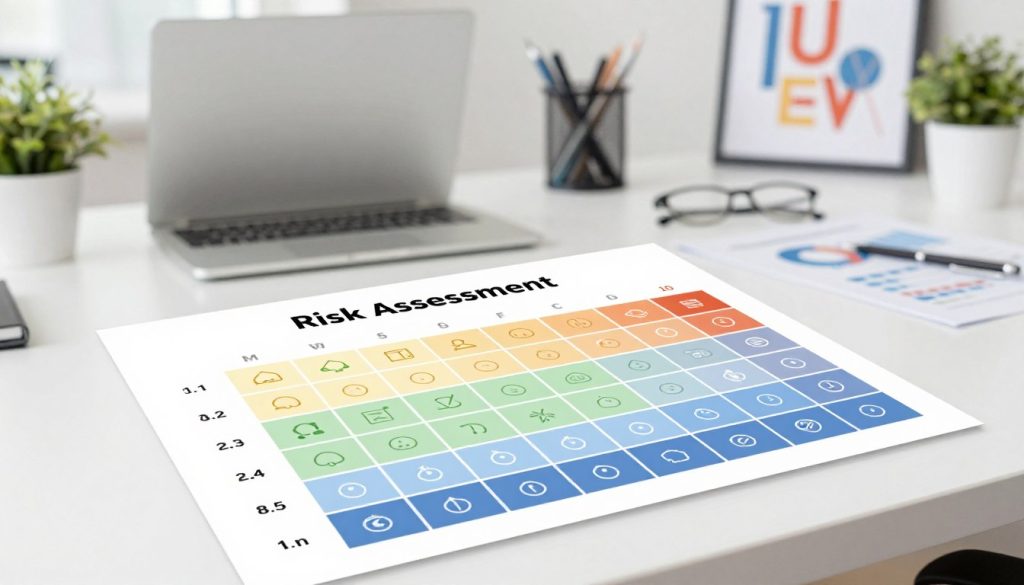
    A detailed risk assessment matrix displayed in a modern office setting, emphasizing clarity and organization. In the foreground, the matrix features a grid layout with varying risk levels color-coded from low to high, each cell containing icons representing different risk factors. The middle ground showcases a stylish, minimalist desk with a laptop and financial documents, hinting at a professional environment. In the background, soft-focus office elements like plants and motivational artwork can be seen, creating a productive atmosphere. Use bright, natural lighting to enhance visibility and invoke a sense of positivity. The angle should capture the matrix head-on, creating a professional and polished look ideal for a business article.

    Response Strategy Documentation

    Response strategy documentation involves detailing the plans and actions to be taken in response to identified risks. This includes:

    Mitigation Action Plans

    Mitigation action plans outline the steps to be taken to reduce the likelihood or impact of risks. These plans should be specific, measurable, achievable, relevant, and time-bound (SMART).

    Responsibility Assignment Charts

    Responsibility assignment charts are used to clearly define the roles and responsibilities of team members in implementing the risk mitigation plans. This ensures accountability and facilitates effective execution.

    By incorporating these essential elements, a business risk management plan template can effectively support an organization’s risk mitigation efforts and enhance its resilience to potential risks.

    Step-by-Step Guide to Creating Your Business Risk Management Plan Template

    To ensure business continuity, it’s essential to have a robust risk management plan in place, tailored to your organization’s specific needs. This guide will walk you through the process of creating a comprehensive business risk management plan template.

    Establishing Your Risk Management Team

    The first step in creating a business risk management plan is to establish a risk management team. This team will be responsible for identifying, assessing, and mitigating risks. It’s crucial to select team members from various departments to ensure a comprehensive understanding of the organization’s risks.

    Identifying Potential Business Risks

    Identifying potential risks is a critical component of the risk management plan. This involves:

    • Brainstorming Techniques: Gathering team members to discuss potential risks and threats to the organization.
    • Historical Data Analysis: Reviewing past incidents and losses to identify patterns and potential future risks.

    Analyzing and Prioritizing Risks

    Once risks are identified, they must be analyzed and prioritized based on their likelihood and potential impact. This can be achieved through:

    • Quantitative Assessment Methods: Using numerical data to assess the potential impact of risks.
    • Qualitative Evaluation Approaches: Assessing the qualitative aspects of risks, such as their potential to damage reputation or affect customer trust.

    Developing Response Strategies

    After prioritizing risks, the next step is to develop response strategies. This includes:

    • Risk Acceptance Guidelines: Deciding when to accept certain risks based on their low impact or likelihood.
    • Risk Transfer Options: Exploring options such as insurance to transfer risk to another party.

    By following these steps, organizations can create a robust business risk management plan template that protects their assets and ensures continuity.

    Implementing Your Risk Management Strategy

    To safeguard against unforeseen events, businesses must implement a comprehensive risk management strategy. This involves several key steps that ensure the effective execution of the risk management plan across the organization.

    Communicating the Plan Across Your Organization

    Effective communication is critical to the successful implementation of a risk management strategy. It is essential to ensure that all stakeholders understand their roles and responsibilities in managing risks. This can be achieved through regular updates, training sessions, and clear documentation of the risk management plan.

    Training Staff on Risk Protocols

    Training staff on risk protocols is vital to ensure that they can identify and respond to potential risks effectively. This includes:

    • Role-Specific Training Programs: Tailoring training to specific roles within the organization to ensure that employees understand the risks associated with their job functions.
    • Simulation Exercises: Conducting simulation exercises to prepare staff for potential crisis scenarios, enhancing their response capabilities.

    A professional business meeting scene illustrating the implementation of a risk management strategy. In the foreground, a diverse group of business professionals in formal attire is gathered around a conference table, reviewing documents, and discussing plans. In the middle, a large digital screen displays graphs and flowcharts related to risk management. The background shows a modern, well-lit boardroom with a large window displaying a city skyline, symbolizing growth and opportunity. The lighting is bright and focused, creating a serious yet collaborative atmosphere. The angle is slightly from above, allowing a comprehensive view of the team dynamics and the strategic planning process. The overall mood is one of determination and professionalism, conveying the importance of effective risk management in business.

    Integrating Risk Management into Business Operations

    To ensure the long-term success of a risk management strategy, it is crucial to integrate risk management into daily business operations. This involves:

    • Embedding Risk Considerations in Decision-Making: Ensuring that risk considerations are a key factor in all business decisions, helping to mitigate potential risks proactively.
    • Creating a Risk-Aware Culture: Fostering a culture within the organization that is aware of and responsive to potential risks, promoting a proactive approach to risk management.

    By implementing these measures, businesses can ensure that their risk management strategy is not only effective but also sustainable in the long term.

    Monitoring and Updating Your Business Risk Management Plan

    A business risk management plan is not a static document; it needs continuous monitoring and updates to remain effective. This ensures that the plan stays relevant and capable of addressing emerging risks.

    Establishing Review Schedules

    To keep the risk management plan up-to-date, it’s essential to establish a regular review schedule. This could be quarterly, bi-annually, or annually, depending on the nature and size of the business. Regular reviews help in identifying new risks and reassessing existing ones.

    Key Performance Indicators for Risk Management

    Utilizing Key Performance Indicators (KPIs) is crucial for measuring the effectiveness of the risk management plan. KPIs can be categorized into leading and lagging indicators.

    Leading Risk Indicators

    Leading indicators predict potential risks before they occur. Examples include monitoring market trends and assessing the financial health of key suppliers.

    Lagging Risk Indicators

    Lagging indicators measure the impact of risks after they have occurred. Examples include tracking the number of incidents or the financial loss due to risk events.

    Adapting to Changing Business Environments

    The business environment is constantly evolving, and the risk management plan must adapt to these changes. This involves identifying trigger events that necessitate plan updates, such as significant changes in market conditions or regulatory requirements.

    Trigger Events for Plan Updates

    Trigger events are significant occurrences that require immediate review and possible update of the risk management plan. Examples include major changes in business operations or unexpected risk events.

    Continuous Improvement Process

    Implementing a continuous improvement process ensures that the risk management plan remains effective over time. This involves regularly reviewing the plan’s performance and making necessary adjustments.

    By following these guidelines, businesses can ensure their risk management plans remain relevant and effective, supporting overall business resilience and continuity.

    Specialized Risk Management Approaches for Different Business Sectors

    Businesses operate in diverse environments, each with its own set of risks that demand tailored risk management plans. Different sectors face unique challenges that require specialized strategies to mitigate potential threats.

    Financial Risk Management Plans

    Financial institutions need to manage risks associated with market fluctuations and credit defaults. Market Risk Templates help in identifying and mitigating risks related to market volatility, while Credit Risk Assessment Frameworks enable banks to evaluate the creditworthiness of borrowers.

    Market Risk Templates

    Market risk templates are designed to assess and manage risks associated with changes in market conditions, such as interest rates and commodity prices.

    Credit Risk Assessment Frameworks

    Credit risk assessment frameworks provide a structured approach to evaluating the credit risk of potential borrowers, helping financial institutions make informed lending decisions.

    Operational Risk Mitigation Strategies

    Operational risk mitigation involves identifying and reducing risks associated with business operations, such as supply chain disruptions or cybersecurity threats.

    Risk Type Mitigation Strategy Benefits
    Supply Chain Disruptions Diversify suppliers and develop contingency plans Reduced dependency on single suppliers, improved resilience
    Cybersecurity Threats Implement robust cybersecurity measures and regular audits Enhanced data protection, reduced risk of cyberattacks

    Supply Chain Risk Management

    Effective supply chain risk management involves assessing and mitigating risks associated with the supply chain, such as supplier insolvency or logistics disruptions.

    Cybersecurity Risk Planning

    Cybersecurity risk planning is critical in today’s digital age, involving the development of Data Breach Response Templates and conducting IT Infrastructure Risk Assessments.

    Data Breach Response Templates

    Data breach response templates provide a structured approach to responding to data breaches, ensuring timely and effective action.

    IT Infrastructure Risk Assessments

    IT infrastructure risk assessments help identify vulnerabilities in IT systems, enabling organizations to take proactive measures to mitigate risks.

    A futuristic office environment showcasing a detailed Risk Management Plan on a sleek conference table. In the foreground, a well-organized document with graphs and charts illustrating different risk management strategies, surrounded by professional business attire individuals engaged in discussion. The middle layer features a large screen displaying analytical data relevant to various business sectors, symbolizing the specialized approaches in risk management. The background reveals modern skyscrapers through a glass wall, emphasizing a corporate atmosphere. Soft, warm lighting enhances the professional mood, while a wide-angle lens captures the dynamic interplay of human engagement and digital elements, inviting viewers to explore the crucial aspects of risk management.

    Conclusion: Maximizing Business Resilience Through Effective Risk Management

    Effective risk management is crucial for businesses to navigate today’s complex and ever-changing landscape. By utilizing a comprehensive business risk management plan template, organizations can proactively identify, assess, and mitigate potential risks, ensuring resilience and continuity.

    A well-implemented risk mitigation plan enables businesses to minimize the impact of unforeseen events, protecting their assets and reputation. This is a key component of enterprise risk management, which integrates risk management into the overall business strategy.

    By following the steps outlined in this article, businesses can develop a robust risk management framework that supports their goals and objectives. This not only enhances their ability to respond to risks but also fosters a culture of resilience and adaptability.

    In conclusion, a proactive approach to risk management is essential for maximizing business resilience. By leveraging the right tools and strategies, organizations can ensure they are well-equipped to handle the challenges of an ever-evolving business environment.


    FAQ

    What is a business risk management plan template, and why do I need it?

    A business risk management plan template is a document that helps you identify, assess, and mitigate risks that could impact your business. You need it to ensure you’re prepared for potential challenges and can minimize losses.

    How do I identify potential business risks?

    You can identify potential business risks by using brainstorming techniques, analyzing historical data, and considering internal and external risk factors. This will help you create a comprehensive risk management plan.

    What is the difference between a risk management plan and a business continuity plan?

    A risk management plan focuses on identifying and mitigating risks, while a business continuity plan outlines the steps to take in case of a disaster or major disruption to ensure business continuity.

    How often should I review and update my risk management plan?

    You should review and update your risk management plan regularly, ideally every 6-12 months, or whenever there are significant changes in your business environment.

    What are some common risk categories for businesses?

    Common risk categories for businesses include financial, operational, strategic, compliance, and reputational risks. Understanding these categories can help you identify potential risks.

    How can I prioritize risks and develop response strategies?

    You can prioritize risks by assessing their likelihood and impact, and then develop response strategies such as risk mitigation, transfer, or acceptance. This will help you allocate resources effectively.

    What is an enterprise risk management framework, and how can it benefit my business?

    An enterprise risk management framework is a holistic approach to managing risk across the organization. It can benefit your business by providing a comprehensive view of risks and enabling proactive risk management.

    How can I integrate risk management into my business operations?

    You can integrate risk management into your business operations by embedding risk considerations into decision-making processes, creating a risk-aware culture, and providing training to staff on risk protocols.

    What are some key performance indicators for risk management?

    Key performance indicators for risk management include leading risk indicators, such as risk exposure, and lagging risk indicators, such as incident frequency. These metrics help you monitor and adjust your risk management plan.

    How can I ensure my risk management plan remains effective over time?

    You can ensure your risk management plan remains effective by regularly reviewing and updating it, using key performance indicators, and adapting to changing business environments.
  • Discover the Types of Risks in Personal Finance

    Discover the Types of Risks in Personal Finance

    Are you aware of the potential financial pitfalls that can impact your economic stability? Managing personal finances effectively requires understanding the various risks involved.

    Financial risk is an inherent part of investing and managing your money. Whether it’s market volatility, inflation, or unexpected expenses, being aware of these risks is crucial to making informed decisions.

    By understanding the different financial risk types, you can take proactive steps to mitigate potential losses and achieve your long-term financial goals.

    Key Takeaways

    • Understanding financial risks is crucial for effective personal finance management.
    • Awareness of different financial risk types can help you make informed decisions.
    • Proactive risk management can mitigate potential financial losses.
    • Informed decision-making is key to achieving long-term financial goals.
    • Being prepared for unexpected expenses is vital to financial stability.

    Understanding Financial Risk Fundamentals

    The world of personal finance is fraught with various types of financial risk that can significantly impact one’s financial health. Financial risk refers to the possibility of losing value or experiencing a negative impact on one’s financial situation due to various factors.

    What Constitutes Financial Risk

    Financial risk encompasses several components, including market risk, credit risk, and liquidity risk. Market risk, for instance, is associated with the volatility of investment values due to changes in market conditions. As Nassim Nicholas Taleb once noted, “The most significant risks are those you can’t see or anticipate.” Understanding these risks is the first step towards mitigating their impact.

    A key aspect of financial risk is its potential to affect investment portfolios. For example, market fluctuations can lead to a decrease in the value of investments. The following table illustrates the impact of market risk on different types of investments:

    Investment Type Market Condition Potential Impact
    Stocks Market Downturn High Loss Potential
    Bonds Interest Rate Change Moderate Loss Potential
    Real Estate Economic Recession High Loss Potential

    Why Risk Management Matters in Personal Finance

    Effective risk management is crucial in personal finance because it helps protect one’s financial assets and achieve long-term financial goals. By understanding and managing financial risks, individuals can make informed decisions about their investments and financial planning. As

    “The biggest risk is not taking any risk…”

    – this quote by

    Mark Zuckerberg

    highlights the importance of balancing risk and caution in financial decision-making.

    Risk management strategies include diversification, insurance, and maintaining an emergency fund. These strategies can help mitigate the impact of financial risks and ensure a more stable financial future.

    Types of Risks in Personal Finance Explained

    Understanding the different types of risks in personal finance is crucial for making informed investment decisions. Personal finance involves various risk factors that can impact financial stability. In this section, we will delve into the different types of risks and how they can be managed effectively.

    Market Risk: Volatility in Investment Values

    Market risk refers to the potential loss that can occur due to fluctuations in the market value of investments. This type of risk is inherent in investments such as stocks, bonds, and mutual funds.

    How to Identify Your Market Risk Exposure

    To identify your market risk exposure, you need to assess your investment portfolio and determine the proportion of investments that are susceptible to market fluctuations. Diversification is key to managing market risk.

    Steps to Mitigate Market Risk

    Mitigating market risk involves diversifying your investment portfolio across different asset classes, such as stocks, bonds, and real estate. Regular portfolio rebalancing is also essential to ensure that your investments remain aligned with your risk tolerance.

    A detailed illustration of market risk management in personal finance. In the foreground, a professional woman in business attire is analyzing financial charts on a digital tablet, her focused expression conveying determination. In the middle ground, transparent graphs and data visualizations float around her, symbolizing various market risks like volatility, credit risk, and interest rate risk. The background features a modern office setting with large windows overlooking a bustling city skyline, bathed in warm, natural light. The atmosphere is one of concentration and diligence, with a subtle, confident color palette of blues and greens representing stability. The lens captures a slightly elevated angle, emphasizing both the subject and the dynamic financial environment around her.

    Credit Risk: The Danger of Default

    Credit risk is the risk of loss due to a borrower’s failure to repay a loan or meet their credit obligations. This type of risk is relevant to lenders and investors in debt securities.

    Assessing Your Credit Risk Profile

    Assessing your credit risk profile involves evaluating your credit history and the creditworthiness of your borrowers or debt securities. A good credit score can help mitigate credit risk.

    Strategies to Reduce Credit Risk

    Reducing credit risk involves diversifying your lending or investment portfolio across different borrowers or debt securities. Conducting thorough credit checks and monitoring credit reports are also crucial.

    Credit Risk Factors Description Mitigation Strategies
    Credit History A borrower’s past credit behavior Conduct thorough credit checks
    Credit Score A numerical representation of creditworthiness Monitor credit reports regularly
    Debt-to-Income Ratio The proportion of income spent on debt repayment Diversify lending or investment portfolio

    Liquidity Risk: When Assets Can’t Be Converted Quickly

    Liquidity risk refers to the difficulty in converting assets into cash quickly and at a fair price. This type of risk is relevant to investors who may need to liquidate their assets to meet financial obligations.

    Measuring Your Liquidity Position

    Measuring your liquidity position involves assessing your cash reserves and the liquidity of your investments. Maintaining an emergency fund is essential to managing liquidity risk.

    Building Better Liquidity Safeguards

    Building better liquidity safeguards involves maintaining a diversified portfolio with liquid assets, such as cash and cash equivalents. Regularly reviewing your liquidity position is also crucial.

    Inflation Risk: The Silent Wealth Eroder

    Inflation risk is the risk that inflation will erode the purchasing power of your money over time. This type of risk is relevant to investors and individuals with cash savings.

    Calculating Inflation’s Impact on Your Finances

    Calculating inflation’s impact involves assessing the rate of inflation and its effect on your investments and savings. Investing in inflation-indexed instruments can help mitigate inflation risk.

    Inflation-Proofing Your Portfolio

    Inflation-proofing your portfolio involves investing in assets that historically perform well during periods of inflation, such as real estate and commodities. Regularly reviewing your investment portfolio is essential to ensure that it remains aligned with your financial goals.

    Additional Financial Risks to Consider

    While many are familiar with market and credit risks, other financial risks such as interest rate and business risks also play a crucial role in personal finance. Understanding these risks can help you make informed decisions to protect your financial well-being.

    Interest Rate Risk: Impact on Loans and Investments

    Interest rate risk affects both loans and investments. When interest rates rise, the value of existing bonds and other fixed-rate investments can decline. Conversely, falling interest rates can make borrowing cheaper but reduce the returns on savings and fixed-income investments.

    How to Manage Variable Rate Debt

    Managing variable rate debt involves understanding how changes in interest rates can impact your monthly payments. Consider refinancing to a fixed-rate loan if you anticipate rising interest rates. Creating a budget that can accommodate potential increases in interest rates is also prudent.

    Protecting Fixed Income Investments

    To protect fixed income investments, consider diversifying your portfolio with a mix of short-term and long-term bonds. This strategy can help mitigate the impact of interest rate changes. Additionally, investing in inflation-indexed bonds can provide protection against both interest rate and inflation risks.

    Business Risk: Entrepreneurial Challenges

    Business risk is a significant concern for entrepreneurs and investors in businesses. Factors such as market competition, regulatory changes, and operational failures can impact business profitability and viability.

    • Diversification: Spread investments across different industries and asset classes.
    • Market Research: Understand market trends and potential disruptions.
    • Contingency Planning: Prepare for potential risks and challenges.

    Systematic Risk: Economy-Wide Threats

    Systematic risk refers to the risk of collapse of an entire financial system or market. This type of risk is inherent in the overall market and cannot be mitigated through diversification alone.

    To manage systematic risk, consider investing in assets that historically perform well during economic downturns, such as gold or government bonds. Staying informed about economic trends and having a long-term investment strategy can also help.

    Longevity Risk: Outliving Your Resources

    Longevity risk is the risk of outliving your savings. With increasing life expectancy, this risk becomes more significant. Planning for retirement and considering annuities or other longevity insurance products can help mitigate this risk.

    1. Start saving for retirement early.
    2. Consider working with a financial advisor to create a sustainable retirement plan.
    3. Review and adjust your retirement plan regularly.

    Practical Strategies for Managing Financial Risks

    In the complex world of personal finance, understanding and mitigating risks is paramount. Effective financial risk management involves a combination of strategies that help protect against various types of financial risks.

    Diversification: The Foundation of Risk Management

    Diversification is a fundamental principle in managing financial risk. By spreading investments across different asset classes, individuals can reduce their exposure to any one particular market or sector.

    Creating a Properly Diversified Portfolio

    A well-diversified portfolio includes a mix of stocks, bonds, real estate, and other investment vehicles. The key is to ensure that the investments are not correlated, meaning they don’t tend to move in the same direction in response to market changes.

    • Stocks: Equities offer potential for long-term growth.
    • Bonds: Fixed-income securities provide regular income and relatively lower risk.
    • Real Estate: Investments in property can offer rental income and capital appreciation.

    Beyond Investments: Diversifying Income Sources

    Diversification isn’t limited to investments. Having multiple sources of income can also mitigate financial risk. This could include a primary job, a side business, or investments that generate regular income.

    “Don’t put all your eggs in one basket.” –

    Mark Twain

    Insurance: Protecting Against Catastrophic Losses

    Insurance is a critical component of financial risk management. It provides a safety net against unforeseen events that could have significant financial implications.

    Essential Insurance Policies for Financial Security

    Key insurance policies include life insurance, health insurance, and disability insurance. The type and amount of coverage needed will depend on individual circumstances, such as family size, health, and occupation.

    Insurance Type Purpose
    Life Insurance Provides financial support to dependents in the event of death.
    Health Insurance Covers medical expenses due to illness or injury.
    Disability Insurance Replaces income if unable to work due to disability.

    Determining Appropriate Coverage Levels

    The appropriate level of insurance coverage depends on various factors, including income, expenses, debts, and dependents. It’s essential to assess these factors to determine the right amount of coverage.

    A modern office setting illustrating financial risk management strategies. In the foreground, a diverse group of three professionals—two men and one woman—are engaged in a discussion around a transparent glass table with charts and graphs displayed on a laptop. The middle layer shows a whiteboard filled with flowcharts and diagrams depicting risk management techniques, such as risk assessment and portfolio diversification. In the background, large windows reveal a cityscape under soft, natural lighting, casting a warm glow throughout the room. The atmosphere is collaborative and focused, capturing a sense of determination and strategic thinking. Use a wide-angle lens to encapsulate the entire scene, emphasizing the dynamic interaction and supportive environment of the workplace.

    Emergency Funds: Your First Line of Defense

    An emergency fund is a pool of savings set aside to cover unexpected expenses or financial emergencies. It acts as a buffer against financial shocks.

    Calculating Your Ideal Emergency Fund Size

    The size of an emergency fund should be enough to cover 3-6 months of living expenses. This amount can vary based on job security, health, and other factors.

    Where to Keep Emergency Savings

    Emergency funds should be kept in liquid, low-risk accounts such as high-yield savings accounts or money market funds. This ensures that the funds are readily accessible when needed.

    Regular Financial Check-ups: Staying Ahead of Risks

    Regular financial check-ups are crucial for identifying and managing financial risks proactively. This involves reviewing financial goals, assessing risk exposure, and adjusting strategies as needed.

    Creating a Risk Assessment Schedule

    Individuals should schedule regular financial reviews, ideally every 6-12 months, to assess their financial health and risk exposure.

    Key Risk Indicators to Monitor

    Key indicators include changes in income, expenses, debt levels, and market conditions. Monitoring these indicators helps in making informed decisions to mitigate potential risks.

    Conclusion: Building Resilience in Your Financial Life

    Understanding the various types of risks in personal finance explained throughout this article is crucial for building a resilient financial future. By recognizing the potential threats to your financial stability, such as market risk, credit risk, and inflation risk, you can take proactive steps to mitigate these dangers.

    Effective risk management involves diversifying your investments, securing appropriate insurance coverage, and maintaining an easily accessible emergency fund. Regular financial check-ups also play a vital role in staying ahead of potential risks and making adjustments as needed.

    By taking control of your financial risks, you empower yourself to achieve long-term financial goals, whether that’s securing a comfortable retirement, funding your children’s education, or simply enjoying peace of mind. Start building your financial resilience today by applying the strategies outlined in this article to your personal finance journey.

    FAQ

    What are the main types of risks in personal finance?

    The main types of risks in personal finance include market risk, credit risk, liquidity risk, inflation risk, interest rate risk, business risk, and systematic risk. Understanding these risks is crucial for effective risk management.

    How can I mitigate market risk in my investments?

    To mitigate market risk, you can diversify your investment portfolio across different asset classes, such as stocks, bonds, and real estate. Regular portfolio rebalancing and investing in a mix of low-risk and higher-risk assets can also help.

    What is credit risk, and how can I reduce it?

    Credit risk refers to the danger of default by borrowers or counterparties. To reduce credit risk, you can assess the creditworthiness of borrowers, diversify your lending or investments, and consider credit insurance or guarantees.

    How do I measure my liquidity risk?

    To measure your liquidity risk, you can assess your ability to convert assets into cash quickly without significant losses. Maintaining an emergency fund and having access to liquid assets, such as savings accounts or money market funds, can help mitigate liquidity risk.

    What is inflation risk, and how can I protect against it?

    Inflation risk refers to the erosion of purchasing power due to rising prices. To protect against inflation risk, you can invest in assets that historically perform well during periods of inflation, such as real estate, commodities, or Treasury Inflation-Protected Securities (TIPS).

    How can I manage interest rate risk in my loans and investments?

    To manage interest rate risk, you can consider fixed-rate loans or investments, or hedge against potential rate changes using financial instruments like interest rate swaps or futures. For variable-rate debt, you can explore options for converting to fixed-rate debt or adjusting your repayment schedule.

    What is systematic risk, and how can I mitigate it?

    Systematic risk refers to economy-wide threats that affect the entire market. To mitigate systematic risk, you can diversify your investments across different asset classes and geographies, and consider investing in assets that are less correlated with the overall market.

    How often should I review my financial risk management strategy?

    It’s essential to review your financial risk management strategy regularly, ideally every 6-12 months, or whenever significant changes occur in your financial situation or goals. Regular reviews help ensure that your strategy remains aligned with your needs and risk tolerance.
  • Optimize Your Personal Risk Management Plan

    Optimize Your Personal Risk Management Plan

    Are you prepared for life’s unexpected twists and turns? Having a well-structured risk management plan is crucial for protecting your financial stability and achieving long-term goals.

    By understanding and implementing effective personal risk management strategies, you can minimize potential losses and maximize your financial well-being. This article will guide you through the process of optimizing your plan to ensure you’re prepared for any situation.

    Key Takeaways

    • Understand the importance of a risk management plan
    • Learn effective strategies for minimizing financial losses
    • Discover how to maximize your financial well-being
    • Gain insights into optimizing your personal risk management plan
    • Find out how to achieve long-term financial stability

    Understanding the Foundations of Risk Management

    Effective risk management starts with a clear understanding of the potential risks involved. Personal risk management is a critical aspect of maintaining financial stability and security. By understanding the foundations of risk management, individuals can take proactive steps to mitigate potential risks and protect their assets.

    What Is Personal Risk Management?

    Personal risk management refers to the process of identifying, assessing, and mitigating risks that could impact an individual’s financial well-being. It involves analyzing potential risks, such as financial, health, and career risks, and implementing strategies to minimize their impact. Effective personal risk management enables individuals to make informed decisions and achieve long-term financial stability.

    Why Everyone Needs a Risk Management Plan

    A risk management plan is essential for everyone, regardless of their financial situation. It helps individuals prepare for unexpected events, such as medical emergencies or job loss, and ensures that they are adequately protected against potential risks. By having a risk management plan in place, individuals can reduce their financial stress and anxiety.

    Common Personal Risks to Consider

    There are several common personal risks that individuals should be aware of, including financial, health and safety, and career and income risks.

    Financial Risks

    Financial risks include unexpected expenses, market volatility, and insufficient savings. These risks can have a significant impact on an individual’s financial stability.

    Health and Safety Risks

    Health and safety risks involve accidents, illnesses, or disabilities that can impact one’s ability to work and earn a living.

    Career and Income Risks

    Career and income risks arise from job insecurity, industry changes, or skill obsolescence. These risks can affect an individual’s ability to maintain a steady income.

    Assessing Your Individual Risk Profile

    Evaluating your personal risk profile is the foundation upon which a robust risk management strategy is built. This process involves a comprehensive analysis of your personal and financial situation to identify potential risks and vulnerabilities.

    Identifying Your Personal and Financial Vulnerabilities

    The first step in assessing your risk profile is to identify areas where you are vulnerable. This includes examining your financial situation, such as your income, expenses, debts, and assets, as well as personal factors like your health, age, and occupation. Vulnerability assessment is a critical component of this process, as it helps you understand where you might be exposed to risk.

    For instance, if you have a family history of certain health issues, you may be more vulnerable to health-related risks. Similarly, if your job is in a high-risk industry, you may face greater occupational hazards. By identifying these vulnerabilities, you can begin to develop strategies to mitigate them.

    Evaluating Risk Probability and Impact

    Once you’ve identified your vulnerabilities, the next step is to evaluate the probability and potential impact of the risks associated with them. This involves analyzing the likelihood of a risk occurring and the potential consequences if it does. Risk probability refers to the chance that a particular risk will occur, while risk impact refers to the potential consequences or effects of that risk.

    For example, a risk with a high probability and high impact requires immediate attention and mitigation. On the other hand, a risk with low probability and low impact might not require as much attention. By evaluating these factors, you can prioritize your risks and focus on the most critical ones.

    Creating Your Risk Assessment Matrix

    A risk assessment matrix is a tool used to visualize and prioritize risks based on their probability and impact. It typically involves plotting risks on a grid, with probability on one axis and impact on the other. This allows you to categorize risks into different levels of priority.

    A detailed risk assessment matrix displayed prominently in the foreground, featuring a grid layout with clearly defined axes labeled "Impact" and "Likelihood." Each cell within the grid is color-coded to represent different risk levels: low, medium, and high. In the middle ground, a diverse group of two professionals in business attire—one woman and one man—are in discussion, pointing towards the matrix with engaged expressions, emphasizing collaboration in risk management. The background features a modern office setting with soft-focus elements, such as a large window allowing natural light to stream in, creating an uplifting atmosphere. The overall mood is professional and serious, with a hint of optimism as they work toward optimizing their personal risk management plan.

    High-priority risks are those that have a high probability of occurring and a significant impact if they do. These risks require immediate attention and mitigation strategies. Examples might include health risks for individuals with a history of serious illness or financial risks associated with high levels of debt.

    Medium-Priority Risks

    Medium-priority risks have a moderate probability and impact. While they are not as critical as high-priority risks, they still require consideration and potentially some mitigation strategies. These might include risks related to job security or moderate financial exposures.

    Low-Priority Risks

    Low-priority risks are those with a low probability and/or low impact. While they should still be monitored, they typically do not require immediate action. Examples might include low-level financial risks or risks associated with less critical aspects of your life or business.

    Personal Risk Management Strategies

    Implementing a robust personal risk management plan involves leveraging multiple strategies to mitigate potential risks. By understanding and applying these strategies, individuals can better protect themselves against various types of risks that could impact their financial stability, health, and overall well-being.

    Risk Avoidance Techniques

    Risk avoidance involves identifying and mitigating risks by avoiding certain activities or investments that pose a high level of risk. For instance, choosing not to invest in volatile stocks or avoiding dangerous hobbies can significantly reduce one’s exposure to potential risks. Effective risk avoidance requires a thorough understanding of the risks associated with different activities and investments.

    • Avoiding high-risk investments
    • Steering clear of hazardous activities
    • Being cautious with financial decisions

    Risk Reduction Methods

    Risk reduction methods aim to decrease the likelihood or impact of a risk. This can be achieved through diversification of investments, implementing safety measures, or maintaining a healthy lifestyle. For example, diversifying your investment portfolio can reduce financial risk, while regular health check-ups can help in early detection and management of health issues. Proactive measures can significantly mitigate potential risks.

    • Diversifying investments
    • Implementing safety protocols
    • Maintaining a healthy lifestyle

    Risk Transfer Options

    Risk transfer involves shifting the risk to another party, typically through insurance or contractual agreements. For instance, purchasing health insurance or liability insurance can transfer the financial risk associated with medical emergencies or legal liabilities to the insurance provider. Insurance products are a common means of transferring risk.

    “Insurance is a crucial tool for managing risk, providing financial protection against unforeseen events.”

    • Purchasing insurance coverage
    • Entering into contractual agreements
    • Outsourcing risk management

    Risk Acceptance and Contingency Planning

    Risk acceptance involves acknowledging a risk and preparing for its potential consequences. Contingency planning is a key aspect of risk acceptance, where individuals develop plans to manage and mitigate the impact of a risk if it materializes. For example, having an emergency fund in place can help manage financial risks. A well-prepared contingency plan can make a significant difference in managing risks effectively.

    Risk Management Strategy Description Example
    Risk Avoidance Avoiding high-risk activities Not investing in volatile stocks
    Risk Reduction Reducing the likelihood or impact of a risk Diversifying investments
    Risk Transfer Shifting the risk to another party Purchasing insurance
    Risk Acceptance Acknowledging and preparing for a risk Having an emergency fund

    By understanding and implementing these personal risk management strategies, individuals can develop a comprehensive plan to mitigate potential risks and enhance their financial security and overall well-being.

    Implementing Your Risk Management Plan

    To safeguard your financial health, it’s essential to put your risk management plan into action. This involves several key steps that help ensure you’re prepared for potential risks and challenges.

    Building an Emergency Fund

    An emergency fund is a critical component of any risk management plan. It provides a financial cushion in case of unexpected expenses or income disruptions. Aim to save three to six months’ worth of living expenses in a readily accessible savings account.

    Insurance Coverage Optimization

    Optimizing your insurance coverage is vital for managing various types of risk. This includes considering different types of insurance to protect against different risks.

    Health Insurance Considerations

    Health insurance is crucial for protecting against medical expenses. Ensure you have adequate coverage that fits your needs, including considerations for deductibles, copays, and maximum out-of-pocket expenses.

    Property and Liability Insurance

    Property insurance protects your assets against damage or loss, while liability insurance shields you from potential lawsuits. Assess your needs for home, auto, and other property insurance, as well as umbrella policies for additional liability coverage.

    Life and Disability Insurance

    Life insurance provides financial protection for your dependents in the event of your death, while disability insurance replaces your income if you become unable to work. Consider your needs for both types of insurance based on your financial obligations and income.

    A professional office environment depicting the implementation of a risk management plan. In the foreground, a diverse group of professionals in business attire, focused on a large wall-mounted diagram mapping out the plan's key steps, using colorful sticky notes and markers. In the middle ground, a large conference table set with laptops and documents, reflecting teamwork and collaboration. In the background, a large window with soft natural light illuminating the space, creating a productive atmosphere. The mood is one of urgency and determination, emphasizing strategic thinking and proactive measures. Use a wide-angle lens to capture the details and depth of the scene, ensuring the various elements are harmoniously composed within the frame.

    Estate Planning Essentials

    Estate planning involves managing your assets and ensuring they are distributed according to your wishes after your death. This includes creating a will, establishing trusts if necessary, and designating powers of attorney.

    Regular Review and Adjustment Process

    A risk management plan is not a static document; it requires regular review and adjustment. Schedule periodic reviews of your plan to ensure it remains aligned with your current financial situation, goals, and risk tolerance.

    Risk Management Component Description Action Required
    Emergency Fund Financial cushion for unexpected expenses Save 3-6 months’ expenses
    Insurance Coverage Protection against various risks Review and optimize insurance types and levels
    Estate Planning Management and distribution of assets Create will, establish trusts, designate powers of attorney
    Regular Review Ensure plan remains relevant and effective Schedule periodic reviews and adjustments

    Conclusion

    Developing a comprehensive personal risk management plan is crucial for achieving financial stability. By understanding your individual risk profile and implementing effective risk management strategies, you can minimize potential risks and maximize your financial well-being.

    A well-crafted risk management plan provides peace of mind and helps you achieve your long-term goals. It involves regularly reviewing and adjusting your plan to ensure it remains aligned with your changing needs and circumstances.

    By taking control of your personal risk management, you can safeguard your financial stability and secure a brighter financial future. Start building your risk management plan today to protect your financial well-being and achieve your goals.

    FAQ

    What is a personal risk management plan?

    A personal risk management plan is a tailored strategy that helps individuals identify, assess, and mitigate potential risks that could impact their financial stability and well-being.

    Why is risk management important?

    Risk management is essential for protecting one’s financial stability and achieving long-term goals by minimizing potential losses and maximizing financial well-being.

    What are some common personal risks to consider?

    Common personal risks include financial risks, such as unexpected expenses or market volatility, health and safety risks, like accidents or illnesses, and career and income risks, including job insecurity or skill obsolescence.

    How do I assess my individual risk profile?

    Assessing your individual risk profile involves identifying personal and financial vulnerabilities, evaluating the probability and impact of potential risks, and creating a risk assessment matrix to prioritize risks.

    What are some personal risk management strategies?

    Personal risk management strategies include risk avoidance techniques, risk reduction methods, risk transfer options, such as insurance, and risk acceptance and contingency planning.

    How often should I review and adjust my risk management plan?

    It’s essential to regularly review and adjust your risk management plan to ensure it remains effective in mitigating potential risks and aligning with your changing needs.

    What is the role of insurance in risk management?

    Insurance plays a crucial role in risk management by providing a financial safety net against unforeseen events, such as accidents, illnesses, or property damage.

    How can I build an emergency fund?

    Building an emergency fund involves setting aside a portion of your income in a readily accessible savings account to cover unexpected expenses or financial shocks.

    What are the key elements of estate planning?

    Estate planning essentials include creating a will, establishing trusts, and designating beneficiaries to ensure the distribution of your assets according to your wishes after your passing.
  • How to Effectively Manage Financial Risk

    How to Effectively Manage Financial Risk

    Are you prepared for the unexpected twists and turns in the financial world? Financial uncertainty can be daunting, but with the right strategies, individuals and businesses can navigate these challenges.

    Effective financial risk management is crucial in today’s volatile economic landscape. It involves identifying potential risks and implementing strategies to mitigate them, ensuring stability and security for your financial future.

    By understanding financial risk management strategies, you can make informed decisions to protect your assets and achieve your financial goals. This article will guide you through the process of managing financial risk, providing you with the tools and knowledge you need to succeed.

    Key Takeaways

    • Understanding the importance of financial risk management
    • Identifying potential financial risks
    • Implementing effective risk management strategies
    • Making informed decisions to protect your assets
    • Achieving financial stability and security

    Understanding Financial Risk

    Understanding financial risk is crucial for making informed investment choices. Financial risk refers to the possibility of losing value on an investment or asset. It encompasses various types of risks that can impact financial health.

    Types of Financial Risks You May Face

    There are several types of financial risks, including:

    • Market Risk: The risk of losses due to changes in market conditions.
    • Credit Risk: The risk of default by borrowers.
    • Operational Risk: The risk of losses due to inadequate processes or systems.

    How Financial Risks Impact Your Financial Health

    Financial risks can have both short-term and long-term impacts on financial health.

    Short-term Consequences

    In the short term, financial risks can lead to unexpected expenses or loss of income.

    Long-term Implications

    Over the long term, unmanaged financial risks can result in reduced financial stability and lower returns on investments. Effective risk management techniques are essential for minimizing financial risk.

    The Importance of Financial Risk Management

    Financial risk management is not just a defensive strategy; it’s a proactive approach to securing financial health and achieving long-term goals. By understanding and managing financial risks, individuals and businesses can avoid potential pitfalls and capitalize on opportunities.

    Benefits of Proactive Risk Management

    Proactive risk management offers numerous benefits, including reduced financial volatility, improved decision-making, and enhanced financial stability. It allows for the identification of potential risks and the implementation of strategies to mitigate them, thereby protecting financial assets.

    A modern office space illustrating financial risk management, showcasing a diverse group of professionals in business attire engaged in discussion. The foreground features a large, interactive digital screen displaying complex financial graphs, risk assessments, and market trends. In the middle ground, a man and a woman analyze data on tablets, looking focused and collaborative. The background reveals a panoramic city view through floor-to-ceiling windows, suggesting a dynamic financial environment with skyscrapers and bustling streets. Soft, natural daylight filters through the glass, casting a warm glow that enhances the professional atmosphere. The overall mood is one of diligence, teamwork, and strategic planning, emphasizing the importance of managing financial risk effectively in a thriving business context.

    Real-World Consequences of Inadequate Risk Planning

    The consequences of not having a risk management plan can be severe. For instance, failing to diversify investments can lead to significant losses if one sector experiences a downturn. A table illustrating the impact of different risk management strategies on financial outcomes is shown below:

    Risk Management Strategy Potential Financial Impact
    Diversification Reduced risk of significant losses
    Hedging Protection against market volatility
    Insurance Coverage against unforeseen events

    Who Needs Risk Management Strategies

    Everyone, from individual investors to large corporations, needs risk management strategies. Whether it’s managing market risk, credit risk, or operational risk, having a plan in place is crucial for financial resilience and success.

    How to Manage Financial Risk Effectively: A Step-by-Step Approach

    To safeguard your financial well-being, it’s essential to adopt a step-by-step risk management strategy. This approach enables you to identify, assess, and mitigate potential risks that could impact your financial health. By following a structured process, you can ensure that you’re taking a proactive and informed approach to managing financial risk.

    Step 1: Identify Potential Risks in Your Financial Portfolio

    The first step in managing financial risk is to identify potential risks in your financial portfolio. This involves reviewing your investments, assets, and liabilities to determine areas that may be vulnerable to risk. Consider factors such as market volatility, interest rate changes, and economic downturns.

    Step 2: Assess and Prioritize Risks Based on Impact and Probability

    Once you’ve identified potential risks, the next step is to assess and prioritize them based on their impact and probability. This involves evaluating the likelihood of each risk occurring and the potential impact on your financial situation. By prioritizing risks, you can focus on the most critical areas that require attention.

    Step 3: Develop Tailored Risk Management Strategies

    With a clear understanding of the potential risks and their priorities, you can develop tailored risk management strategies. This may involve diversifying your investments, hedging against potential losses, or building emergency funds. The key is to create a strategy that aligns with your financial goals and risk tolerance.

    Step 4: Document Your Risk Management Plan

    The final step is to document your risk management plan. This involves creating a comprehensive document that outlines the identified risks, prioritization, and mitigation strategies. By documenting your plan, you can ensure that it’s implemented consistently and reviewed regularly to adapt to changing circumstances.

    By following these steps and adopting risk management best practices, you can effectively control financial risk and protect your financial well-being. Regular review and updates to your risk management plan will help you stay on track and make informed decisions.

    Essential Financial Risk Management Strategies

    Proactive risk management is the key to safeguarding your financial future and ensuring resilience in the face of uncertainty. By employing effective financial risk management strategies, you can mitigate potential losses and capitalize on opportunities.

    A modern office setting reflecting financial risk management strategies, featuring a diverse group of three professionals in formal business attire discussing strategies. In the foreground, a confident female financial analyst points at a transparent digital display showing graphs and charts depicting risk management metrics. The middle ground includes a round table cluttered with financial reports and laptops. In the background, a large window reveals a bustling city skyline under soft natural lighting, hinting at a bright future in finance. The mood is professional and collaborative, with an emphasis on teamwork and strategic planning. The scene should have an optimistic atmosphere, focused on innovation in financial management.

    Diversification: Spreading Your Financial Exposure

    Diversification is a fundamental strategy for managing financial risk. By spreading your investments across different asset classes, such as stocks, bonds, and real estate, you can reduce your exposure to any one particular market. This approach helps to balance your portfolio and can lead to more stable returns over time.

    • Invest in a mix of domestic and international stocks.
    • Consider bonds and other fixed-income securities.
    • Explore alternative investments, such as real estate or commodities.

    Insurance and Hedging Techniques

    Insurance and hedging are critical components of a comprehensive risk management plan. Insurance products, such as life and health insurance, can protect against unforeseen events, while hedging strategies, like options and futures, can help mitigate potential losses in your investment portfolio.

    Key insurance products to consider:

    • Life insurance to protect your family’s financial well-being.
    • Health insurance to cover medical expenses.
    • Disability insurance to replace lost income.

    Building Emergency Funds and Cash Reserves

    Maintaining an easily accessible savings fund is vital for managing financial risk. Emergency funds and cash reserves can provide a cushion against unexpected expenses or financial downturns, helping you avoid debt and stay on track with your financial goals.

    Best practices for building emergency funds:

    • Save three to six months’ worth of living expenses.
    • Keep your emergency fund in a liquid, low-risk account.
    • Review and adjust your fund regularly.

    Risk Transfer Methods

    Risk transfer involves shifting potential losses to another party, typically through insurance or contractual agreements. By transferring risk, you can protect your financial assets and reduce your exposure to unforeseen events.

    Examples of risk transfer methods include:

    • Insurance contracts.
    • Hedging agreements.
    • Contractual indemnification clauses.

    Tools and Techniques for Effective Risk Assessment

    Accurate risk assessment is the foundation of a robust financial risk management strategy. To effectively manage financial risk, it’s essential to understand the various tools and techniques available for risk assessment.

    Quantitative Risk Analysis Methods

    Quantitative risk analysis involves numerical methods to assess risk. This approach helps in understanding the potential impact of financial risks on your portfolio.

    Risk Metrics and Calculations

    Risk metrics such as Value-at-Risk (VaR) and Expected Shortfall (ES) are crucial for quantifying potential losses. These metrics provide insights into the potential impact of market fluctuations on your investments.

    Stress Testing Your Finances

    Stress testing involves analyzing how your financial portfolio would perform under extreme market conditions. This technique helps in identifying potential vulnerabilities and developing strategies to mitigate them.

    Risk Metric Description Application
    Value-at-Risk (VaR) Measures potential loss with a given probability Portfolio risk management
    Expected Shortfall (ES) Average loss beyond VaR Risk assessment during market stress

    Qualitative Risk Evaluation Approaches

    Qualitative risk evaluation involves assessing risks based on their likelihood and potential impact. This approach is useful for identifying risks that are not easily quantifiable.

    Digital Tools and Resources for Risk Management

    Various digital tools and resources are available to aid in risk management, including risk assessment software and financial analytics platforms. These tools help in streamlining the risk assessment process and providing actionable insights.

    By leveraging both quantitative and qualitative risk analysis methods, and utilizing digital tools and resources, you can develop a comprehensive risk management strategy that protects your financial assets.

    Implementing Your Risk Management Plan

    To achieve financial resilience, it’s vital to put your risk management plan into action. Implementing your plan effectively requires a structured approach that includes setting a realistic timeline, assigning responsibilities, and continuously monitoring progress.

    Creating a Realistic Risk Management Timeline

    Developing a timeline is crucial for the successful implementation of your risk management plan. This involves breaking down larger tasks into smaller, manageable steps, and allocating sufficient time for each activity. A realistic timeline helps in avoiding last-minute rushes and ensures that all stakeholders are aligned with the plan’s objectives.

    Assigning Responsibilities and Accountability

    Clear assignment of responsibilities is key to the effective execution of your risk management plan. Identify the individuals or teams responsible for each task and ensure they understand their roles and the expectations. This clarity helps in maintaining accountability and facilitates smoother implementation.

    Task Responsible Individual/Team Deadline
    Risk Assessment Risk Management Team Quarter 1
    Strategy Development Financial Planning Department Quarter 2
    Plan Implementation Operations Team Quarter 3

    Monitoring Progress and Key Risk Indicators

    Continuous monitoring of your risk management plan is essential to identify areas that require adjustment. Establish key risk indicators (KRIs) to track the effectiveness of your strategies and make informed decisions. Regular review sessions help in staying on track and achieving the desired outcomes.

    A modern office environment depicting a professional team engaged in risk management strategies. In the foreground, a diverse group of four professionals, dressed in business attire, is gathered around a sleek conference table, analyzing financial charts and documents. The middle ground shows a large digital screen displaying graphs, risk matrices, and key performance indicators, symbolizing effective planning. The background features a panoramic view of a bustling city skyline through large windows, suggesting a dynamic business atmosphere. Soft, warm lighting highlights the faces of the team, creating a focused yet collaborative mood, with shallow depth of field to emphasize the professionals’ expressions of concentration and engagement.

    When and How to Adjust Your Strategy

    Be prepared to adjust your risk management strategy as needed. Changes in market conditions, new regulations, or shifts in your financial portfolio may necessitate updates to your plan. Regularly review your strategies and make adjustments to ensure they remain aligned with your financial goals and risk tolerance.

    By following these steps and maintaining a proactive approach, you can effectively implement your risk management plan and enhance your financial resilience.

    Conclusion: Building Financial Resilience Through Effective Risk Management

    Effectively managing financial risk is crucial for achieving long-term financial stability. By understanding the types of financial risks you may face and implementing proactive risk management strategies, you can protect your financial well-being.

    Controlling financial risk involves identifying potential risks, assessing their impact, and developing tailored strategies to mitigate them. This proactive approach enables you to navigate uncertain financial landscapes with confidence.

    Proactive risk management is not just about avoiding losses; it’s also about seizing opportunities. By having a robust risk management plan in place, you can make informed investment decisions and capitalize on market opportunities.

    Ultimately, building financial resilience through effective risk management requires ongoing effort and vigilance. By staying informed, regularly reviewing your risk management plan, and adjusting your strategy as needed, you can ensure long-term financial success.

    FAQ

    What is financial risk management, and why is it important?

    Financial risk management is the process of identifying, assessing, and mitigating potential financial risks that can impact an individual’s or organization’s financial health. It’s essential to manage financial risk to avoid significant financial losses and ensure long-term financial stability.

    What are the most common types of financial risks?

    The most common types of financial risks include market risk, credit risk, operational risk, liquidity risk, and interest rate risk. Understanding these risks is crucial to developing effective risk management strategies.

    How can I identify potential financial risks in my portfolio?

    To identify potential financial risks, you should regularly review your financial statements, assess your investment portfolio, and stay informed about market trends and economic conditions. You can also use risk assessment tools and techniques, such as stress testing and scenario analysis, to identify potential risks.

    What is diversification, and how can it help manage financial risk?

    Diversification is a risk management strategy that involves spreading investments across different asset classes, sectors, and geographic regions to reduce exposure to any one particular risk. By diversifying your portfolio, you can minimize the impact of potential losses and maximize returns.

    How often should I review and update my risk management plan?

    You should review and update your risk management plan regularly, ideally quarterly or annually, to ensure it remains relevant and effective. You should also review your plan whenever there are significant changes in your financial situation or market conditions.

    What are some common risk management strategies used by individuals and businesses?

    Common risk management strategies include diversification, insurance, hedging, risk transfer, and building emergency funds and cash reserves. The most effective strategy will depend on your specific financial situation and risk profile.

    How can I assess the effectiveness of my risk management plan?

    To assess the effectiveness of your risk management plan, you should regularly monitor key risk indicators, track your progress, and adjust your strategy as needed. You can also use risk assessment tools and techniques, such as stress testing and scenario analysis, to evaluate the effectiveness of your plan.
  • Mastering Risk Management Basics for Beginners

    Mastering Risk Management Basics for Beginners

    Are you aware of the potential pitfalls that can derail your financial goals? Understanding risk management is crucial in today’s uncertain economic landscape.

    As a beginner, navigating the world of finance can be daunting. However, with the right knowledge, you can make informed decisions that protect your investments and secure your financial future.

    Learning the fundamentals of risk management can help you identify potential risks and develop strategies to mitigate them. This guide will walk you through the essential concepts and provide you with the tools you need to get started.

    Key Takeaways

    • Understand the importance of risk management in achieving financial stability.
    • Learn how to identify potential risks and develop mitigation strategies.
    • Discover the key principles of risk management for beginners.
    • Get started with practical tips and expert advice.
    • Enhance your financial literacy and confidence.

    Understanding Risk Management Fundamentals

    Risk management basics for beginners are not just about avoiding risks, but also about seizing opportunities with confidence. Understanding risk management fundamentals is crucial for anyone looking to make informed decisions in their personal or professional lives.

    What Is Risk Management and Why It Matters

    Risk management is the process of identifying, assessing, and controlling threats to an organization’s capital and earnings. It matters because it helps businesses and individuals mitigate potential losses and maximize opportunities. As Mark J. Perry, a finance professor, once said, “Risk management is not just about avoiding risks; it’s about understanding the risks you’re taking and making informed decisions.”

    “The biggest risk is not taking any risk…”

    Mark Zuckerberg

    The Risk Management Process Overview

    The risk management process involves several key steps that help organizations manage risk effectively. This process is crucial for identifying potential risks and developing strategies to mitigate them.

    The Five-Step Approach to Managing Risks

    • Step 1: Identify potential risks that could impact your organization.
    • Step 2: Assess the likelihood and potential impact of each risk.
    • Step 3: Develop strategies to mitigate or manage each risk.
    • Step 4: Implement these strategies across the organization.
    • Step 5: Monitor and review the effectiveness of your risk management efforts.

    Common Risk Categories for Beginners

    Beginners should be aware of several common risk categories, including financial, operational, and strategic risks. Understanding these categories can help individuals and organizations develop more effective risk management strategies.

    Financial, Operational, and Strategic Risks

    Financial risks relate to an organization’s financial health, including risks associated with investments and funding. Operational risks involve the day-to-day operations of a business, such as supply chain disruptions. Strategic risks are related to the overall strategy of the organization, including risks associated with mergers and acquisitions.

    Risk Management Basics for Beginners: Getting Started

    Embarking on the journey of risk management can seem daunting, but with the right guidance, beginners can quickly grasp the fundamentals. Understanding the basics is crucial for effective risk management implementation.

    Essential Terminology You Need to Know

    To navigate the world of risk management, it’s essential to familiarize yourself with key terminology. Terms like risk assessment, risk mitigation, and risk monitoring are foundational. Risk assessment involves identifying potential risks, while risk mitigation focuses on strategies to reduce or eliminate these risks.

    Other critical terms include likelihood and impact, which are used to evaluate the probability and potential consequences of identified risks. Understanding these concepts will help you develop a solid foundation in risk management.

    Setting Up Your First Risk Management Framework

    Establishing a risk management framework is a crucial step in the risk management process. This framework serves as a structured approach to identifying, assessing, and mitigating risks. To set up your first framework, start by defining the scope and objectives of your risk management efforts.

    Next, identify the key stakeholders and their roles in the risk management process. It’s also important to establish a risk management team that will oversee the implementation of the framework. Utilize risk management software to streamline the process and improve efficiency.

    A modern risk management framework illustration, showcasing a multi-layered diagram. In the foreground, a sleek, semi-transparent chart displaying various risk management components like identification, assessment, and mitigation, using vibrant colors like blue, green, and orange. In the middle ground, business professionals in smart casual attire are collaborating over the chart, pointing and discussing strategies, emphasizing teamwork and collaboration. The background features an office setting with large windows allowing natural light, casting soft shadows. The atmosphere is focused and professional, promoting a sense of clarity and organization, with a warm and inviting color palette. Use a wide-angle lens perspective to capture the entire scene effectively, maintaining a balance between diagram clarity and human interaction.

    Tools and Resources for Beginners

    As a beginner, having the right tools and resources can significantly simplify the risk management process. There are various risk management tools available, ranging from simple spreadsheets to sophisticated software solutions.

    Free and Low-Cost Risk Management Software

    For those on a budget, there are several free and low-cost risk management software options. These tools can help you identify, assess, and mitigate risks without breaking the bank. Some popular options include:

    • Risk management templates in Excel or Google Sheets
    • Free risk assessment tools like Riskonnect or Protecht.ERM
    • Low-cost risk management software such as RiskMatrix or LogicManager

    By leveraging these tools and resources, beginners can effectively manage risks and improve their overall risk management capabilities.

    Effective Risk Identification Methods

    Effective risk identification is the foundation of a robust risk management strategy. It involves recognizing potential risks that could impact your project or business. By identifying these risks early, you can develop strategies to mitigate or manage them.

    Brainstorming and Mind Mapping Techniques

    Brainstorming is a powerful technique for generating a list of potential risks. It involves gathering a team to share ideas and discuss possible risks. Mind mapping can be used in conjunction with brainstorming to visually organize ideas and identify relationships between different risks.

    For example, during a brainstorming session for a new product launch, your team might identify risks such as supply chain disruptions, market competition, or regulatory changes. By mind mapping these risks, you can see how they interconnect and prioritize them accordingly.

    Using Checklists and Historical Data

    Checklists are another effective tool for risk identification. They help ensure that you don’t overlook common risks associated with your project or industry. Historical data from past projects can also provide valuable insights into potential risks.

    “The key to identifying risks is to look at your project from different angles and consider what could go wrong.”

    Project Management Expert

    SWOT Analysis for Risk Identification

    A SWOT analysis can be a useful method for identifying risks by examining the Strengths, Weaknesses, Opportunities, and Threats related to your project or business. This analysis helps you understand internal and external factors that could impact your risk exposure.

    Practical SWOT Exercise for Your Project or Business

    To conduct a SWOT analysis, follow these steps:

    • Identify your project’s or business’s Strengths and Weaknesses.
    • Examine external Opportunities and Threats.
    • Use this information to identify potential risks.
    SWOT Element Description Risk Identification
    Strengths Internal capabilities Leverage strengths to mitigate risks
    Weaknesses Internal vulnerabilities Address weaknesses to reduce risk
    Opportunities External factors to capitalize on Identify opportunities to offset threats
    Threats External factors that could harm Develop strategies to counter threats

    By applying these risk identification methods, you can gain a comprehensive understanding of your risk exposure and develop effective strategies to manage those risks.

    Risk Assessment Techniques for Newcomers

    For those new to risk management, understanding risk assessment techniques is a vital skill. Risk assessment is the process of identifying, evaluating, and prioritizing potential risks that could impact an organization. Newcomers must grasp the different methods used to assess risks to effectively manage them.

    Qualitative vs. Quantitative Assessment

    There are two primary approaches to risk assessment: qualitative and quantitative. Qualitative assessment involves evaluating risks based on their likelihood and impact using non-numerical data. This method is useful when there is limited data available or when a quick assessment is needed.

    Quantitative assessment, on the other hand, uses numerical data to evaluate risks. This approach provides a more precise measurement of risk likelihood and impact, enabling more informed decision-making.

    When to Use Each Approach

    The choice between qualitative and quantitative assessment depends on the context and available data. Qualitative assessment is suitable for initial risk screening or when dealing with complex, uncertain risks. Quantitative assessment is more appropriate when there is sufficient historical data and when precise risk measurements are required.

    “The key to effective risk assessment is not just about choosing between qualitative and quantitative methods, but understanding when and how to apply each.” – Risk Management Expert

    Risk Probability and Impact Matrix

    A commonly used tool in risk assessment is the Risk Probability and Impact Matrix. This matrix plots the likelihood of a risk against its potential impact, helping to categorize risks into different levels of priority.

    Risk Level Probability Impact
    Low Unlikely Minimal
    Medium Possible Moderate
    High Likely Significant

    Prioritizing Risks: The Must-Know Approach

    Prioritizing risks is crucial for effective risk management. The Risk Probability and Impact Matrix is a useful tool for this purpose. By focusing on the most likely and impactful risks, organizations can allocate resources more efficiently.

    The 80/20 Rule in Risk Management

    The 80/20 rule, also known as the Pareto principle, suggests that approximately 80% of problems are caused by 20% of the risks. Applying this principle to risk management means focusing on the most critical risks that have the greatest potential impact.

    A diverse group of professionals engaged in a collaborative risk assessment workshop. In the foreground, two individuals—one male and one female—are analyzing data on a digital tablet, dressed in smart business attire. In the middle ground, a large whiteboard filled with colorful charts, graphs, and diagrams illustrating various risk assessment techniques. Behind them, a cozy modern conference room with soft, natural lighting filtering through large windows, casting gentle shadows. The atmosphere is focused and dynamic, showcasing teamwork and strategic discussion. The overall color palette features calming blues and greens to evoke a sense of stability and professionalism.

    By understanding and applying these risk assessment techniques, newcomers to risk management can develop the skills needed to identify, evaluate, and prioritize risks effectively. This foundation is essential for implementing successful risk mitigation strategies and ensuring the resilience of an organization.

    Implementing Risk Mitigation Strategies

    Understanding and implementing risk mitigation strategies can significantly reduce the impact of potential risks. Effective risk mitigation is crucial for protecting an organization’s assets and ensuring its continuity.

    The Four T’s of Risk Response: Tolerate, Treat, Transfer, Terminate

    The Four T’s represent different approaches to managing risks. Tolerate involves accepting the risk and its potential consequences. Treat means taking steps to reduce the risk. Transfer involves shifting the risk to another party, often through insurance or outsourcing. Terminate means eliminating the risk by avoiding the activity that causes it.

    For example, a company might decide to transfer the risk of data breaches by investing in cyber insurance. Alternatively, they might choose to treat the risk by implementing robust cybersecurity measures.

    Creating Effective Risk Response Plans

    A risk response plan outlines the steps to be taken in response to identified risks. It should include clear objectives, roles, and responsibilities, as well as a timeline for implementation.

    Template for Your First Risk Response Plan

    Here’s a simple template to get you started:

    Risk Response Strategy Owner Timeline
    Data Loss Implement regular backups IT Department Within 2 weeks
    Cyber Attack Enhance cybersecurity measures IT Department Immediate

    Monitoring and Reviewing Your Risk Management Efforts

    Regular monitoring and review are essential to ensure that risk management strategies remain effective. This involves tracking the implementation of risk response plans and assessing their outcomes.

    Setting Up Regular Risk Reviews

    Schedule regular risk reviews to:

    • Assess the effectiveness of current risk management strategies
    • Identify new risks
    • Update risk response plans as necessary

    By implementing these strategies and regularly reviewing their effectiveness, organizations can ensure they are well-prepared to manage risks.

    Conclusion: Building Your Risk Management Confidence

    Mastering risk management basics is a crucial step in navigating today’s complex business landscape. By understanding risk exposure and following a beginner’s guide to risk management, you can develop a robust framework to identify, assess, and mitigate potential risks.

    As you’ve learned throughout this article, effective risk management involves a combination of understanding risk fundamentals, identifying potential risks, and implementing mitigation strategies. By applying these principles, you’ll be better equipped to manage uncertainty and make informed decisions.

    Continuing to build on your risk management knowledge and skills will help you stay ahead of the curve. Stay confident in your ability to manage risk, and keep exploring best practices to refine your approach.

    FAQ

    What is risk management, and why is it essential for beginners?

    Risk management is the process of identifying, assessing, and mitigating potential risks that could impact a project or business. It’s essential for beginners because it helps them anticipate and prepare for potential problems, reducing the likelihood of costly mistakes and improving overall success.

    What are the common risk categories that beginners should be aware of?

    Beginners should be aware of financial, operational, and strategic risks. Financial risks relate to budgeting and financial planning, operational risks involve day-to-day operations, and strategic risks concern the overall direction and goals of the project or business.

    How do I get started with setting up my first risk management framework?

    To set up your first risk management framework, start by identifying potential risks, assessing their likelihood and impact, and developing strategies to mitigate or manage them. You can use free and low-cost risk management software to help streamline the process.

    What is SWOT analysis, and how can it be used for risk identification?

    SWOT analysis is a technique used to identify the strengths, weaknesses, opportunities, and threats related to a project or business. It can be used for risk identification by analyzing the weaknesses and threats to identify potential risks.

    What is the difference between qualitative and quantitative risk assessment?

    Qualitative risk assessment involves evaluating risks based on their likelihood and impact using descriptive terms, while quantitative risk assessment uses numerical data and statistical methods to assess risks. The choice between the two approaches depends on the specific needs and goals of the project or business.

    How often should I review and update my risk management plan?

    You should review and update your risk management plan regularly, ideally as part of a scheduled risk review process. This helps ensure that your risk management strategies remain effective and relevant in a changing environment.

    What are some effective risk mitigation strategies that I can implement?

    Effective risk mitigation strategies include tolerating, treating, transferring, or terminating risks. You can also develop risk response plans and monitor and review your risk management efforts to ensure their effectiveness.

    Are there any free or low-cost tools available for risk management?

    Yes, there are many free and low-cost tools available for risk management, including risk management software, templates, and online resources. These can help you get started with risk management without breaking the bank.
  • Top Safe Investments for Retirement

    Top Safe Investments for Retirement

    Are you prepared to secure your financial future? Planning for retirement savings is a crucial aspect of financial management.

    Choosing the right low-risk investments is key to ensuring that your retirement is financially stable.

    Selecting safe investment options for retirement can be challenging, but it’s essential for long-term financial security.

    Key Takeaways

    • Understanding the importance of retirement planning.
    • Identifying low-risk investment strategies.
    • Balancing safety and growth in your retirement portfolio.
    • Exploring various safe investment options.
    • Securing your financial future through informed decisions.

    Understanding Retirement Investment Goals

    A well-crafted retirement plan starts with a clear understanding of your investment goals and risk tolerance. This foundational step enables you to make informed decisions that align with your retirement aspirations.

    Balancing Safety and Growth

    One of the primary challenges in retirement planning is balancing the need for safety with the potential for growth. Investments that are too conservative may not keep pace with inflation, while overly aggressive investments can expose you to undue risk.

    The Impact of Inflation on Retirement Savings

    Inflation can significantly erode the purchasing power of your retirement savings over time. For instance, with an average annual inflation rate of 3%, the purchasing power of $1 million would be reduced to approximately $740,000 in 10 years.

    Year Inflation Rate Purchasing Power
    0 0% $1,000,000
    5 3% $860,000
    10 3% $740,000

    Setting Realistic Return Expectations

    It’s crucial to set realistic return expectations based on your investment portfolio. This involves understanding the historical performance of your investments and adjusting your expectations accordingly.

    Key Factors to Consider Before Investing

    Before investing for retirement, it’s essential to consider several key factors that will impact your financial security. Understanding these elements will help you make informed decisions and create a more effective investment strategy.

    Assessing Your Time Horizon

    Your time horizon is a critical factor in determining your investment approach. Generally, the longer you have until retirement, the more risk you can afford to take on. Conversely, if retirement is near, you may want to focus on more conservative investments to protect your savings.

    Determining Your Risk Tolerance

    Risk tolerance is another vital consideration. It refers to your ability to withstand market fluctuations without panicking. Understanding your risk tolerance will help you choose investments that align with your comfort level.

    A well-organized workspace that conveys the theme of prudent investing, featuring a wooden desk cluttered with financial documents, graphs, and a laptop displaying investment options. In the foreground, a hand holds a magnifying glass, focusing on important charts. In the middle ground, an elegant pie chart and bar graphs are vividly displayed, illustrating different investment factors like risk, return, liquidity, and time horizon. The background shows a serene office environment with a large window letting in soft, natural light, casting gentle shadows that enhance focus. The overall mood is calm and analytical, emphasizing careful consideration and wisdom in investment decisions. The scene is designed to evoke professionalism and trust, with warm wood tones and cool blue accents. No human figures are present, ensuring a clean, distraction-free composition.

    Understanding Tax Implications

    Tax implications can significantly impact your investment returns. Different investments are taxed differently, and understanding these implications can help you make more tax-efficient decisions.

    Planning for Required Minimum Distributions

    If you have a traditional IRA or 401(k), you’ll need to plan for required minimum distributions (RMDs) starting at age 72. Failing to take RMDs can result in significant penalties.

    Factor Description Impact on Investments
    Time Horizon The length of time until retirement Influences risk level and investment choices
    Risk Tolerance Ability to withstand market fluctuations Determines the level of risk in your portfolio
    Tax Implications The tax treatment of different investments Affects net returns on investments
    RMDs Required minimum distributions from retirement accounts Impacts tax obligations and investment strategy

    Safe Investment Options for Retirement

    When planning for retirement, it’s crucial to consider safe investment options that balance risk and return. These investments are designed to provide stability and predictability, which are essential for retirees who rely on their savings for living expenses.

    Treasury Securities: TIPS, T-Bills, and T-Bonds

    Treasury securities are backed by the full faith and credit of the U.S. government, making them extremely low-risk. Treasury Inflation-Protected Securities (TIPS) adjust their principal value to keep pace with inflation, ensuring that the purchasing power of your investment is maintained. T-Bills are short-term securities with maturities ranging from a few weeks to a year, while T-Bonds offer longer-term investment options.

    The benefits of Treasury securities include:

    • Low risk due to government backing
    • Flexibility in terms of maturity periods
    • TIPS provide protection against inflation

    Certificates of Deposit (CDs) Strategies

    Certificates of Deposit (CDs) are time deposits offered by banks with a fixed interest rate and maturity date. They tend to be low-risk and provide a fixed return, making them attractive for conservative investors. To maximize returns, consider a CD ladder strategy, where you invest in multiple CDs with staggered maturity dates.

    High-Yield Savings Accounts

    High-Yield Savings Accounts offer liquidity with higher interest rates compared to traditional savings accounts. They are FDIC-insured, which means deposits are insured up to $250,000, making them a safe option for savers. These accounts are ideal for emergency funds or short-term savings goals.

    Money Market Funds

    Money Market Funds invest in low-risk, short-term debt securities, such as commercial paper and treasury bills. They aim to provide liquidity and preserve capital while generating a modest return. These funds are suitable for investors seeking a low-risk investment with easy access to their money.

    Key characteristics of Money Market Funds include:

    1. Investment in high-quality, short-term debt
    2. Liquidity, allowing for easy withdrawal of funds
    3. Stable Net Asset Value (NAV)

    Fixed-Income Investments for Steady Returns

    Retirees often rely on fixed-income investments to generate steady returns and maintain their lifestyle. These investments provide a predictable income stream, which is crucial for retirees who need to budget their expenses carefully.

    Corporate Bonds: Investment Grade vs. High-Yield

    Corporate bonds are a popular fixed-income investment option, offering a range of choices from investment-grade to high-yield bonds. Investment-grade bonds are issued by companies with strong credit ratings, providing a relatively safe investment with lower yields. In contrast, high-yield bonds offer higher returns but come with a higher risk due to the issuer’s lower credit rating.

    Municipal Bonds and Tax Advantages

    Municipal bonds are another attractive fixed-income investment, particularly for their tax advantages. The interest earned on municipal bonds is often exempt from federal and state taxes, making them an attractive option for investors in higher tax brackets. This tax efficiency can enhance the overall return on investment.

    A tranquil, professional office setting showcasing fixed-income investments. In the foreground, a polished wooden desk with a stack of financial reports and a calculator, symbolizing careful planning. In the middle ground, a diverse group of investment professionals, dressed in business attire, engaged in discussion, analyzing charts on a laptop. The background features a large window with soft natural light pouring in, revealing a city skyline, creating a sense of stability and trust. The atmosphere should be one of calm focus, emphasizing reliability and steady returns, with a warm color palette to evoke security and confidence in retirement planning. Use a slight depth of field to draw attention to the desk and individuals while softly blurring the city behind them.

    Creating an Effective Bond Ladder

    A bond ladder is a strategy that involves investing in bonds with staggered maturity dates. This approach helps manage interest rate risk and provides liquidity as bonds mature at regular intervals. By creating a bond ladder, investors can ensure a steady stream of income and reduce the impact of interest rate fluctuations.

    Bond Funds and ETFs for Simplicity

    For investors seeking simplicity and diversification in their fixed-income investments, bond funds and ETFs are viable options. These investment vehicles pool money from multiple investors to invest in a diversified portfolio of bonds, offering a convenient way to gain exposure to various fixed-income securities.

    Some key benefits of bond funds and ETFs include:

    • Diversification across a range of bonds
    • Professional management
    • Liquidity, as shares can be easily bought and sold

    Retirement-Specific Investment Vehicles

    As you approach retirement, it’s essential to consider investment vehicles that cater specifically to your needs. Certain investment options are designed to provide a steady income, manage risk, and offer tax advantages, making them particularly suitable for retirement savings.

    Fixed and Indexed Annuities

    Fixed and indexed annuities can provide a guaranteed income stream in retirement. Fixed annuities offer a predictable return, while indexed annuities allow you to benefit from market gains up to a certain cap. According to a quote by “The Balance”, “annuities can provide a predictable income stream, which can be a valuable component of a retirement income plan.”

    “Annuities can be a valuable tool for retirement planning, offering a guaranteed income stream that can help ensure you don’t outlive your assets.”

    Target-Date Funds: Automatic Rebalancing

    Target-date funds are another retirement-specific investment option. They automatically rebalance to manage risk as you approach your retirement date. This feature makes them particularly appealing to those who want a hands-off approach to managing their retirement investments.

    Dividend-Paying Stocks and Funds

    Dividend-paying stocks and funds can offer a regular income stream, making them attractive for retirees. Investing in established companies with a history of paying consistent dividends can help provide the income needed during retirement.

    Health Savings Accounts (HSAs)

    Health Savings Accounts (HSAs) are a tax-advantaged way to save for medical expenses in retirement. Contributions are tax-deductible, and the funds grow tax-free. Using an HSA can be an effective strategy for covering healthcare costs in retirement.

    In conclusion, retirement-specific investment vehicles like annuities, target-date funds, dividend-paying stocks, and HSAs can play a crucial role in securing your financial future. By understanding and leveraging these options, you can create a more robust retirement plan.

    Real Estate Investment Options

    As you plan for retirement, considering real estate investment options can be a strategic move. Real estate investments can provide a tangible asset and a potential source of passive income, diversifying your retirement portfolio.

    One of the most accessible ways to invest in real estate is through REITs (Real Estate Investment Trusts). REITs allow you to invest in a diversified portfolio of properties without directly managing them. There are several types of REITs, including equity REITs, mortgage REITs, and hybrid REITs, each offering different benefits and risks.

    REITs: Types and Benefits

    REITs are known for their ability to provide a steady income stream through dividends. They are required to distribute at least 90% of their taxable income to shareholders, making them an attractive option for income-seeking investors.

    Type of REIT Description Benefits
    Equity REITs Invest in properties Potential for long-term appreciation
    Mortgage REITs Invest in mortgages Income through interest payments
    Hybrid REITs Combination of equity and mortgage REITs Diversified income streams

    Rental Properties: Management Considerations

    Investing in rental properties can provide a steady income stream, but it requires active management. Property management involves handling tenant relations, maintenance, and potentially dealing with vacancies.

    “Real estate cannot be lost or stolen, nor can it be carried away. Purchased with common sense, paid for in full, and managed by responsible people, it is about the safest investment in the world.” – Franklin D. Roosevelt

    Real Estate Crowdfunding Platforms

    Real estate crowdfunding platforms offer a new way to invest in real estate with lower capital requirements. These platforms allow you to invest in specific projects or properties, providing a diversified real estate portfolio.

    A serene outdoor scene featuring a diverse group of professionals discussing real estate investments. In the foreground, a mature woman in a tailored business suit holds a tablet, gesturing towards a modern blueprint. Beside her, a middle-aged man in smart casual attire points at a detailed property listing. In the middle ground, a sleek, contemporary building with large glass windows symbolizes lucrative real estate. The background showcases a clear blue sky and lush greenery, conveying a sense of growth and stability. Soft, natural sunlight highlights the scene, casting gentle shadows and creating a warm atmosphere. The image captures collaboration, professionalism, and the promise of wise investment in real estate for retirement.

    By considering these real estate investment options, you can create a diversified retirement portfolio that includes tangible assets and potential sources of passive income.

    Creating a Diversified Retirement Portfolio

    Diversification is crucial when it comes to retirement investing, as it helps spread risk across various asset classes. A diversified retirement portfolio can provide a steady income stream and help you achieve your long-term financial goals.

    Asset Allocation Strategies by Age

    Asset allocation is a critical component of a diversified retirement portfolio. The right asset allocation strategy varies by age, with younger investors typically taking on more risk and older investors shifting towards more conservative investments.

    For example, a younger investor might allocate 80% of their portfolio to stocks and 20% to bonds, while an older investor might allocate 40% to stocks and 60% to bonds.

    Age Stocks Allocation Bonds Allocation
    30-40 80% 20%
    50-60 60% 40%
    70+ 40% 60%

    The Bucket Strategy for Retirement Income

    The bucket strategy involves dividing your retirement portfolio into different buckets based on when you’ll need the money. This approach helps ensure that you have sufficient liquidity to meet your short-term needs while also allowing for long-term growth.

    • Short-term bucket: Covers expenses for the next 1-3 years.
    • Medium-term bucket: Invested in a mix of stocks and bonds for 3-10 years.
    • Long-term bucket: Focuses on growth investments for 10+ years.

    Regular Portfolio Rebalancing

    Regular portfolio rebalancing is essential to maintain your target asset allocation. As different investments perform variably over time, your portfolio may drift from its original allocation, potentially increasing risk.

    Rebalancing involves periodically reviewing your portfolio and adjusting the allocation to ensure it remains aligned with your investment goals and risk tolerance.

    Working with Financial Advisors

    Working with a financial advisor can provide valuable guidance, especially when it comes to complex decisions like asset allocation and portfolio rebalancing.

    When to Seek Professional Help

    Consider seeking professional help if you’re unsure about how to create a diversified retirement portfolio or need assistance with portfolio rebalancing.

    Choosing the Right Advisor

    When choosing a financial advisor, look for someone with experience in retirement planning and a fee structure that aligns with your needs.

    By following these strategies and working with a financial advisor if needed, you can create a diversified retirement portfolio that helps you achieve financial security in your retirement years.

    Conclusion: Securing Your Retirement Future

    Securing your retirement future requires a well-thought-out investment strategy. By understanding your retirement goals and considering key factors before investing, you can create a secure financial foundation.

    A diversified approach to retirement planning is crucial. This involves selecting the right mix of safe investment options, fixed-income investments, and other retirement-specific investment vehicles to achieve your goals.

    Effective retirement planning enables you to maintain your lifestyle and achieve financial stability. By following the principles outlined in this article, you can take a significant step towards securing your retirement future.

    Ultimately, a well-planned retirement strategy will provide peace of mind, allowing you to enjoy your retirement years with confidence. Focus on retirement planning and make informed decisions to secure your financial future.

    FAQ

    What are the safest investment options for retirement?

    Treasury securities, such as TIPS, T-Bills, and T-Bonds, Certificates of Deposit (CDs), High-Yield Savings Accounts, and Money Market Funds are considered safe investment options for retirement.

    How do I balance safety and growth in my retirement investments?

    Balancing safety and growth involves understanding your risk tolerance, assessing your time horizon, and diversifying your portfolio with a mix of low-risk and potentially higher-return investments.

    What is the impact of inflation on retirement savings?

    Inflation can erode the purchasing power of your retirement savings, making it essential to consider inflation-protected investments, such as TIPS, to maintain the value of your savings.

    What are the tax implications of my retirement investments?

    Different investments have varying tax implications; for example, municipal bonds offer tax advantages, while withdrawals from traditional retirement accounts are taxed as ordinary income.

    How do I determine my risk tolerance for retirement investments?

    Assessing your risk tolerance involves considering your age, financial situation, investment goals, and comfort with market volatility to determine the appropriate level of risk for your retirement investments.

    What is a bond ladder, and how can it help manage interest rate risk?

    A bond ladder is an investment strategy that involves purchasing bonds with staggered maturity dates to manage interest rate risk and provide a regular income stream.

    What are the benefits of using a Health Savings Account (HSA) for retirement savings?

    HSAs offer tax advantages for saving for medical expenses in retirement, allowing contributions to grow tax-free and withdrawals for qualified medical expenses to be tax-free.

    How can I create a diversified retirement portfolio?

    Creating a diversified retirement portfolio involves asset allocation strategies, such as diversifying across different asset classes, and regular portfolio rebalancing to maintain your target allocation.

    When should I seek professional help for my retirement planning?

    Consider seeking professional help when you need guidance on complex investment decisions, require assistance with creating a personalized retirement plan, or need help navigating significant life changes.

    What are the benefits of working with a financial advisor for retirement planning?

    Working with a financial advisor can provide valuable guidance, help you create a tailored retirement plan, and offer expertise in navigating complex investment options and tax implications.
  • How Much Money Do I Need to Retire Comfortably?

    How Much Money Do I Need to Retire Comfortably?

    Are you wondering if you’ll be able to afford the retirement you’ve always dreamed of? Retirement planning can seem daunting, but understanding your financial needs is the first step towards a comfortable post-work life.

    Planning for retirement involves more than just saving; it’s about creating a sustainable income stream that supports your lifestyle.

    Determining your retirement needs requires considering various factors, including your desired lifestyle, expenses, and potential income sources. By assessing these elements, you can better understand what’s required for a comfortable retirement.

    Key Takeaways

    • Understanding your retirement goals is crucial for planning.
    • Assessing your expenses and income sources is key to determining your retirement needs.
    • Creating a sustainable income stream is vital for a comfortable retirement.
    • Retirement planning involves more than just saving money.
    • Considering your desired lifestyle is essential for determining your retirement needs.

    The Reality of Retirement Planning Today

    As we navigate the modern retirement landscape, it’s clear that old rules no longer apply. The traditional one-size-fits-all approach to retirement planning is being replaced by a more personalized and flexible strategy.

    Why Traditional Retirement Rules Are Changing

    The economic landscape has undergone significant changes, impacting retirement savings goals. Factors such as increased longevity, market volatility, and rising healthcare costs have rendered traditional retirement rules obsolete. It’s essential to reassess your retirement financial advice to ensure it aligns with the current economic reality.

    Setting Realistic Financial Expectations

    To achieve a comfortable retirement, it’s crucial to set realistic financial expectations. This involves understanding your retirement savings goal and creating a tailored plan. By doing so, you can ensure that you’re on track to meet your retirement objectives.

    By staying informed and adapting to the changing retirement landscape, you can make informed decisions about your retirement financial advice and create a more secure financial future.

    Key Factors That Determine How Much Money Do I Need to Retire

    Assessing how much money you’ll need in retirement involves evaluating several key considerations. Retirement budgeting is not a straightforward calculation; it’s influenced by various personal factors that can significantly impact your financial requirements.

    Assessing Your Desired Retirement Age

    The age at which you plan to retire is a crucial factor. Retiring earlier means you’ll need more money to cover a longer retirement period. Conversely, working longer can reduce the amount you need to save. Consider your health, life expectancy, and financial situation when deciding on your retirement age.

    Defining Your Retirement Lifestyle Goals

    Your retirement lifestyle will significantly impact your expenses. Will you travel extensively, or stay close to family? Do you plan to pursue hobbies or start a new business? Defining your retirement lifestyle goals will help you estimate your expenses more accurately.

    Estimating Your Longevity Risk

    Longevity risk refers to the possibility of outliving your retirement savings. With increasing life expectancy, it’s essential to plan for a longer retirement. Consider your family history and health when estimating your longevity risk.

    Factor Impact on Retirement Savings Action
    Retirement Age Earlier retirement means more years to fund Consider delaying retirement or saving more
    Lifestyle Goals Higher expenses for travel, hobbies, etc. Plan your expenses based on your lifestyle goals
    Longevity Risk Outliving your savings Plan for a longer retirement, consider annuities

    By carefully assessing these factors and creating a personalized plan, you can better determine how much money you’ll need to retire comfortably. This will involve balancing your retirement income sources, including pensions, Social Security, and personal savings, to meet your retirement budgeting needs.

    Step-by-Step Retirement Calculation Methods

    Retirement planning requires a clear understanding of your financial needs, and using step-by-step calculation methods can simplify this process. To determine how much you need to retire comfortably, you can use various approaches.

    Applying the 4% Withdrawal Rule

    The 4% withdrawal rule is a popular method for estimating retirement savings needs. It suggests that you can withdraw 4% of your retirement savings annually without depleting your nest egg. For example, if you have $1 million in savings, you can expect to withdraw $40,000 per year.

    Using the 80% Income Replacement Approach

    Another approach is to aim to replace 80% of your pre-retirement income to maintain a similar lifestyle in retirement. If you earn $100,000 before retirement, you’ll need $80,000 per year in retirement.

    Creating Your Personalized Retirement Budget

    To create a personalized retirement budget, start by tracking your current expenses. Use an Essential Expenses Worksheet to categorize your spending into needs and wants.

    Essential Expenses Worksheet

    Expense Category Monthly Cost Annual Cost
    Housing $1,500 $18,000
    Food $500 $6,000
    Healthcare $300 $3,600

    Discretionary Spending Considerations

    Don’t forget to account for discretionary spending, such as travel and hobbies. According to a recent survey, “62% of retirees plan to travel extensively during their retirement years.”

    “Retirement is a time to enjoy the fruits of your labor, and with careful planning, you can afford to pursue your passions.”

    By using these step-by-step retirement calculation methods and creating a personalized budget, you can better understand your retirement needs and work towards a more secure financial future.

    Mapping Your Retirement Expense Categories

    A well-planned retirement requires a thorough understanding of where your money will go. As you transition into this new phase of life, your expenses will likely shift, with some costs decreasing while others increase.

    Healthcare and Long-term Care Planning

    One of the significant expenses in retirement is healthcare. As you age, medical costs can rise substantially. It’s essential to plan for healthcare and long-term care needs, considering options like Medicare, supplemental insurance, and long-term care insurance.

    A visually engaging illustration depicting retirement planning expenses, set in a modern home office. In the foreground, a professional-looking individual, dressed in smart casual attire, thoughtfully reviews financial documents and a laptop displaying graphs and charts on retirement savings. The middle ground features a large corkboard pinned with colorful sticky notes categorizing different retirement expenses such as housing, healthcare, travel, and leisure. In the background, a window reveals a serene garden scene with lush greenery, suggesting a peaceful retirement lifestyle. The lighting is warm and inviting, casting soft shadows, creating a cozy atmosphere. The image captures a sense of focus and optimism about future financial security, emphasizing the importance of careful planning.

    Housing Options and Their Financial Impact

    Housing is another critical expense category. You may choose to downsize, move to a retirement community, or stay in your current home. Each option has financial implications, including potential savings or ongoing costs like mortgages, property taxes, and maintenance.

    Travel and Leisure Budget Considerations

    Many retirees look forward to traveling and pursuing hobbies. Allocating a budget for these activities is vital to enjoying your retirement. Consider setting aside funds for travel, entertainment, and other leisure activities that bring you joy.

    By carefully mapping your retirement expense categories, you can create a more accurate and sustainable retirement budget, ensuring a more comfortable post-work life.

    Building Your Retirement Income Strategy

    Creating a sustainable retirement income strategy is crucial for ensuring financial comfort in your golden years. A well-structured plan helps you navigate the complexities of retirement finances, ensuring that you can maintain your lifestyle without undue stress.

    Maximizing Social Security Benefits

    One of the foundational elements of retirement income is Social Security. Maximizing these benefits can significantly impact your financial stability. Consider delaying your claims to increase your monthly payouts, or explore strategies for spousal benefits if applicable.

    Evaluating Pension and Annuity Options

    Pensions and annuities can provide a predictable income stream in retirement. When evaluating these options, consider factors like payout structures, inflation protection, and the financial stability of the provider.

    Creating Income from Investment Portfolios

    A diversified investment portfolio can be a vital source of retirement income. Strategies include:

    • Dividend-focused investments for regular income
    • Bond ladder approaches to manage interest rate risk

    Dividend-Focused Strategies

    Investing in dividend-paying stocks can provide a relatively stable income stream. Look for companies with a history of consistent dividend payments and a strong financial position.

    Bond Ladder Approaches

    A bond ladder involves purchasing bonds with staggered maturity dates. This strategy can help manage interest rate risk and provide a predictable income stream over time.

    By combining these strategies, you can create a robust retirement income plan that supports your financial goals and lifestyle aspirations.

    Accelerating Your Retirement Savings Plan

    A successful retirement savings plan involves more than just saving; it requires strategic planning. To achieve your retirement savings goal, you need to optimize your financial resources and make informed decisions.

    Optimizing 401(k) and IRA Contributions

    One of the most effective ways to boost your retirement savings is by maximizing your contributions to 401(k) and IRA accounts. These retirement accounts offer tax benefits that can significantly enhance your savings over time.

    For instance, contributing to a traditional 401(k) or IRA can reduce your taxable income, while a Roth IRA allows for tax-free growth and withdrawals in retirement.

    Implementing Catch-Up Strategies After 50

    For individuals aged 50 and above, catch-up contributions can be a game-changer. The IRS allows additional contributions to 401(k) and IRA accounts, providing an opportunity to accelerate your retirement savings.

    By taking advantage of these catch-up contributions, you can potentially add thousands of dollars to your retirement fund, helping you achieve your retirement budgeting goals.

    Exploring Alternative Investment Vehicles

    Diversifying your investment portfolio is crucial for maximizing returns and minimizing risk. Consider exploring alternative investment options, such as real estate or annuities, to supplement your retirement income.

    A detailed illustration of a retirement savings plan, depicting a serene office environment. In the foreground, a professional, middle-aged woman in business attire is reviewing financial documents on her desk, surrounded by a laptop, charts, and a piggy bank symbolizing savings. The middle layer features a large window displaying a bright, sunny day outside, with greenery visible in the background, representing growth and potential. Soft sunlight filters in, casting a warm glow on the scene, enhancing the feeling of optimism about the future. The composition should be calm and inviting, with a focus on financial security and proactive planning, using a wide-angle perspective to capture the entire setting effectively.

    By implementing these strategies, you can create a more robust retirement savings plan and enjoy a more secure financial future.

    Protecting Your Retirement Plan from Economic Threats

    Retirement planning isn’t just about saving money; it’s also about safeguarding your nest egg from economic uncertainties. As you approach retirement, it’s crucial to implement strategies that protect your savings from inflation, market volatility, and tax implications.

    Building Inflation Protection into Your Portfolio

    Inflation can erode the purchasing power of your retirement savings over time. To combat this, consider investing in assets that historically perform well during inflationary periods, such as Treasury Inflation-Protected Securities (TIPS) or real estate. Diversifying your portfolio with these investments can help maintain your standard of living in retirement.

    Creating Buffers Against Market Downturns

    Market downturns can significantly impact your retirement savings. To mitigate this risk, consider adopting a diversified investment strategy that includes a mix of stocks, bonds, and other assets. This can help cushion the impact of market fluctuations on your overall portfolio.

    Minimizing Tax Burden on Retirement Income

    Taxes can take a substantial bite out of your retirement income. Strategies such as tax-efficient withdrawal planning from your retirement accounts, or converting traditional IRA funds to a Roth IRA, can help minimize your tax liability. Consulting with a financial advisor can provide personalized guidance tailored to your situation.

    By incorporating these strategies into your retirement plan, you can better protect your savings from economic threats and enjoy a more secure financial future.

    Conclusion: Taking Action on Your Retirement Journey

    Retirement planning is a complex but crucial process. Understanding how much money do you need to retire is just the beginning. By assessing your desired retirement age, defining your lifestyle goals, and estimating your longevity risk, you can create a personalized retirement plan.

    Effective retirement planning involves mapping your expense categories, building a retirement income strategy, and protecting your plan from economic threats. By maximizing Social Security benefits, evaluating pension and annuity options, and creating income from investment portfolios, you can ensure a stable financial future.

    Now that you’ve learned the key factors in determining your retirement needs, it’s time to take action. Start by applying the step-by-step retirement calculation methods discussed earlier. With a clear plan in place, you’ll be better equipped to achieve your retirement goals and enjoy the financial security you deserve.

    FAQ

    How much money do I need to retire comfortably?

    The amount of money needed to retire comfortably varies depending on factors such as retirement age, lifestyle goals, and expenses. Using a retirement savings calculator can help determine a personalized retirement savings goal.

    What is a good retirement savings goal?

    A good retirement savings goal is typically considered to be around 70% to 80% of your pre-retirement income. However, this can vary depending on your individual circumstances and retirement plans.

    How do I create a retirement budget?

    Creating a retirement budget involves estimating your expenses, including essential expenses such as housing and healthcare, and discretionary spending on travel and leisure. Consider using a retirement budgeting worksheet to help you get started.

    What are the best ways to generate retirement income?

    Common sources of retirement income include Social Security benefits, pension and annuity payments, and income from investment portfolios. Consider working with a financial advisor to create a personalized retirement income strategy.

    How can I maximize my Social Security benefits?

    Maximizing Social Security benefits involves understanding your claiming options and potentially delaying benefits to increase your monthly payments. Consider using a Social Security benefits calculator to help you make an informed decision.

    What are some strategies for protecting my retirement savings from inflation?

    Strategies for protecting retirement savings from inflation include investing in inflation-protected securities, such as Treasury Inflation-Protected Securities (TIPS), and considering alternative investment vehicles, such as real estate or commodities.

    How can I minimize taxes on my retirement income?

    Minimizing taxes on retirement income involves understanding the tax implications of your retirement income sources, such as Social Security benefits and withdrawals from tax-deferred accounts. Consider working with a tax professional to create a tax-efficient retirement plan.
  • Discover the Top Retirement Options for Self-Employed Individuals

    Discover the Top Retirement Options for Self-Employed Individuals

    Are you a self-employed individual wondering how to secure your financial future after you stop working? Planning for retirement can be daunting, especially when you’re your own boss.

    As a self-employed individual, you’re not alone in facing the challenge of finding the right retirement plan. With various options available, it’s essential to understand what’s best for your unique situation.

    This article will guide you through the top retirement options tailored for self-employed individuals like you, helping you make an informed decision about your financial future.

    Key Takeaways

    • Understanding the importance of retirement planning for self-employed individuals.
    • Exploring various retirement options available.
    • Learning how to choose the best retirement plan for your needs.
    • Discovering the benefits of starting early.
    • Getting insights into managing your retirement funds effectively.

    Why Retirement Planning Is Different for the Self-Employed

    Unlike company-employed workers, self-employed individuals must take a proactive and personalized approach to retirement planning. This difference is largely due to the absence of employer-sponsored retirement plans, which traditionally provide a structured savings mechanism.

    Unique Challenges Self-Employed People Face

    Self-employed individuals encounter several challenges when planning for retirement. They must navigate complex financial decisions without the safety net of an employer-matched retirement plan. Key challenges include variable income, lack of access to group retirement plans, and the need to personally manage investment risks.

    Challenge Description Impact on Retirement Planning
    Variable Income Unpredictable earnings can make it difficult to commit to regular retirement savings. Makes it challenging to maintain consistent contributions.
    Lack of Employer Plans No access to employer-sponsored retirement plans or matching contributions. Requires self-employed individuals to seek out alternative retirement savings options.
    Personal Investment Management The need to personally oversee investment choices and risk management. Demands a higher level of financial literacy and time commitment.

    The Importance of Taking Control of Your Retirement

    Taking control of retirement planning allows self-employed individuals to tailor their savings strategy to their unique financial situation and goals. By starting early and being consistent, self-employed individuals can build a substantial retirement fund. Proactive planning also enables them to make adjustments as their business and personal circumstances evolve.

    Best Retirement Plans for Self-Employed Individuals

    Retirement planning for the self-employed requires careful consideration of various plans, including Solo 401(k), SEP IRA, and SIMPLE IRA. Each of these plans offers distinct advantages and is suited to different types of self-employed individuals.

    Solo 401(k) Plans

    Solo 401(k) plans are designed for self-employed individuals and business owners with no employees other than their spouse. They offer high contribution limits and flexibility in investment options.

    Contribution Limits and Rules

    The contribution limit for Solo 401(k) plans is quite high, allowing participants to contribute both as an employer and an employee. For 2023, the total contribution limit is $57,000, or $63,500 if you’re 50 or older.

    Tax Benefits

    Contributions to a Solo 401(k) are tax-deductible, reducing your taxable income for the year. The funds grow tax-deferred until withdrawal.

    Who It’s Best For

    Solo 401(k) plans are ideal for self-employed individuals with high incomes and no employees. They are particularly beneficial for those who want to maximize their retirement savings.

    SEP IRAs (Simplified Employee Pension)

    SEP IRAs are another popular retirement plan for self-employed individuals. They are relatively easy to set up and maintain, with flexible contribution rules.

    Setup and Contribution Rules

    SEP IRAs allow employers to contribute up to 25% of an employee’s compensation, up to a maximum of $57,000 in 2023. Contributions are made on a pre-tax basis.

    Tax Advantages

    Contributions to SEP IRAs are tax-deductible, and the plan assets grow tax-deferred. Withdrawals are taxed as ordinary income.

    Ideal Candidates

    SEP IRAs are suitable for self-employed individuals with fluctuating incomes, as the contribution amount can vary from year to year.

    SIMPLE IRAs (Savings Incentive Match Plan for Employees)

    SIMPLE IRAs are designed for small businesses and self-employed individuals. They are easier to administer than traditional 401(k) plans but have lower contribution limits.

    How They Work for Self-Employed

    Self-employed individuals can set up a SIMPLE IRA by making a contribution as both the employer and the employee. The employer contribution is typically a match of the employee’s contribution.

    Who Should Consider This Option

    SIMPLE IRAs are a good choice for self-employed individuals who plan to have employees in the future, as they are required to make contributions to the plan on behalf of their employees.

    Plan Type Contribution Limit (2023) Tax Benefits Ideal For
    Solo 401(k) $57,000 (or $63,500 if 50+) Tax-deductible contributions, tax-deferred growth High-income self-employed with no employees
    SEP IRA 25% of compensation, up to $57,000 Tax-deductible contributions, tax-deferred growth Self-employed with fluctuating incomes
    SIMPLE IRA $14,000 (or $17,000 if 50+) Tax-deductible contributions, tax-deferred growth Small businesses and self-employed planning to hire employees

    A serene office space designed for self-employed individuals, featuring a wooden desk cluttered with financial documents, a laptop showing retirement graphs, and a few green plants for a touch of nature. In the foreground, a person in smart casual attire, analyzing a colorful chart labeled 'Best Retirement Plans.' In the middle ground, a bookshelf filled with financial and investment books, adding a sense of depth. The background shows a large window letting in soft, warm sunlight, creating a calm and focused atmosphere. The lighting is bright yet soft, emphasizing clarity and professionalism. The angle is slightly angled from the side, capturing both the desk and the window, conveying a productive workspace ambiance ideal for self-employed individuals planning their retirement.

    Traditional and Roth IRAs as Supplemental Options

    Beyond the typical retirement plans, self-employed individuals can benefit from exploring Traditional and Roth IRAs. These Individual Retirement Accounts offer additional ways to save for retirement, providing flexibility and potential tax benefits.

    How Traditional IRAs Work for Self-Employed

    Traditional IRAs allow self-employed individuals to make tax-deductible contributions, reducing their taxable income for the year. The funds grow tax-deferred, meaning you won’t pay taxes until you withdraw the money in retirement.

    Key benefits include:

    • Tax-deductible contributions
    • Tax-deferred growth
    • Flexibility in investment choices

    Benefits of Roth IRAs for Self-Employed Individuals

    Roth IRAs, on the other hand, are funded with after-tax dollars, so you’ve already paid income tax on the money. The benefit is that the money grows tax-free, and withdrawals are tax-free if certain conditions are met.

    Advantages of Roth IRAs include:

    • Tax-free growth and withdrawals
    • No required minimum distributions (RMDs) at age 72
    • Flexibility to withdraw contributions penalty-free

    Using IRAs Alongside Other Retirement Plans

    Self-employed individuals can use IRAs in conjunction with other retirement plans, such as Solo 401(k)s or SEP IRAs, to maximize their retirement savings. This strategy can help optimize tax benefits and increase overall savings.

    Health Savings Accounts (HSAs) as Retirement Tools

    Health Savings Accounts (HSAs) offer a unique triple tax advantage that can make them an attractive retirement savings vehicle for self-employed individuals. While primarily used for medical expenses, HSAs can also serve as a supplemental retirement account.

    A serene office environment illustrating the concept of Health Savings Accounts (HSAs) as retirement tools. In the foreground, a professional individual in business attire, a middle-aged man or woman, is reviewing financial documents on a sleek desk, with a laptop open to an HSA planning tool. In the middle, there’s a small indoor plant and a coffee mug, emphasizing a calm workspace. In the background, light pours in through large windows, casting a warm glow, with a cityscape visible, symbolizing self-employment and urban life. Soft focus on the background to enhance the subject. The atmosphere is focused and optimistic, conveying the potential of HSAs in retirement planning. Use natural lighting, shot at a 45-degree angle to highlight the subject's thoughtful engagement.

    Triple Tax Benefits

    The triple tax advantage of HSAs makes them particularly valuable. Contributions to HSAs are tax-deductible, reducing taxable income for the year. The funds grow tax-free, meaning no taxes are owed on investment earnings. Finally, withdrawals used for qualified medical expenses are tax-free.

    Key Benefits:

    • Tax-deductible contributions
    • Tax-free growth
    • Tax-free withdrawals for qualified medical expenses

    Eligibility for Self-Employed

    To be eligible for an HSA, self-employed individuals must have a high-deductible health plan (HDHP) and cannot be covered by any other non-HDHP health plan. They also cannot be claimed as a dependent on someone else’s tax return.

    Maximizing HSA Benefits

    To maximize HSA benefits for retirement, self-employed individuals should consider contributing as much as possible, especially if they are in a higher tax bracket. They should also invest their HSA funds to grow their savings over time.

    “Using an HSA as a retirement savings tool requires a bit of planning, but the tax benefits can be substantial.” – Financial Expert

    By understanding the benefits and eligibility requirements of HSAs, self-employed individuals can make informed decisions about incorporating these accounts into their retirement planning strategy.

    How to Choose the Right Retirement Plan for Your Situation

    Choosing the best retirement plan as a self-employed individual involves assessing various options and aligning them with your financial goals. A well-informed decision can significantly impact your financial security in retirement.

    Step 1: Assess Your Income and Business Structure

    Understanding your income and business structure is crucial in selecting a retirement plan. For instance, solo 401(k) plans are ideal for high-income earners, while SEP IRAs offer simplicity for businesses with a few employees. Consider your business’s financial health and your personal income variability when making this assessment.

    Step 2: Consider Your Tax Situation and Goals

    Your tax situation plays a significant role in choosing between traditional and Roth retirement plans. Traditional plans offer tax-deferred growth, while Roth plans provide tax-free withdrawals in retirement. Consider your current tax bracket and your expected tax bracket in retirement to make an informed decision.

    Step 3: Evaluate Administrative Requirements

    Some retirement plans, like SEP IRAs, have minimal administrative requirements, while others, such as SIMPLE IRAs, require more formalities, including annual notifications to employees. Consider the time and resources you can dedicate to managing your retirement plan.

    Step 4: Compare Contribution Limits and Flexibility

    Different plans have varying contribution limits and flexibility. For example, solo 401(k) plans often have higher contribution limits compared to SEP IRAs and SIMPLE IRAs. Evaluate your ability to contribute and the flexibility you need in your retirement plan.

    As

    “The key to a successful retirement is not just saving, but saving smartly.”

    By following these steps, self-employed individuals can make an informed decision that aligns with their unique financial situation and goals.

    Common Mistakes to Avoid When Planning for Retirement

    Self-employed individuals often face unique challenges when planning for retirement, making it crucial to avoid common mistakes. A well-planned retirement strategy is essential for financial security.

    Waiting Too Long to Start Saving

    One of the most significant mistakes is delaying retirement savings. The earlier you start, the more time your money has to grow. Even small, consistent contributions can add up over time.

    Neglecting to Adjust Contributions as Income Changes

    As your income fluctuates, it’s essential to adjust your retirement contributions accordingly. Failing to do so may result in missed opportunities for savings.

    A reflective scene showcasing common retirement planning mistakes. In the foreground, a worried middle-aged self-employed individual, dressed in professional business attire, sits at a cluttered desk filled with financial documents, a calculator, and a laptop open to a retirement planning spreadsheet. The expression on their face conveys concern and confusion. In the middle ground, a wall filled with sticky notes, each highlighting mistakes such as “Underestimating healthcare costs” and “Ignoring tax implications.” In the background, a large calendar shows upcoming deadlines, with dim natural lighting illuminating the scene, creating a sense of urgency. The overall mood is contemplative and slightly anxious, emphasizing the challenges of effective retirement planning.

    Missing Important Tax Deductions

    Self-employed individuals can benefit from various tax deductions related to retirement savings. Being aware of these deductions can help maximize your retirement funds.

    Failing to Diversify Retirement Investments

    Diversifying your retirement investments is crucial to manage risk. A balanced portfolio can help ensure a more stable financial future.

    Conclusion

    Effective retirement planning is crucial for self-employed individuals to achieve financial security. By understanding the various retirement options available, such as Solo 401(k) plans, SEP IRAs, and Health Savings Accounts, you can choose a plan that aligns with your financial goals and situation.

    Implementing the right retirement planning strategies can significantly impact your self-employed financial security. It’s essential to assess your income, business structure, and tax situation to select the most suitable retirement plan.

    By taking proactive steps towards securing your financial future, you can enjoy a more stable and predictable retirement. Start by evaluating your current financial situation, adjusting your contributions as needed, and diversifying your retirement investments.

    With the right retirement plan in place, you can look forward to a more secure financial future. Take control of your retirement planning today and ensure a more stable tomorrow.

    FAQ

    What are the best retirement plans for self-employed individuals?

    The best retirement plans for self-employed individuals include Solo 401(k) Plans, SEP IRAs, and SIMPLE IRAs, each offering unique benefits and contribution limits.

    How do I choose the right retirement plan for my situation?

    To choose the right retirement plan, assess your income and business structure, consider your tax situation and goals, evaluate administrative requirements, and compare contribution limits and flexibility.

    Can I use Traditional and Roth IRAs alongside other retirement plans?

    Yes, Traditional and Roth IRAs can be used as supplemental retirement savings options alongside other retirement plans, providing additional savings opportunities and flexibility.

    What are the benefits of Health Savings Accounts (HSAs) for retirement?

    HSAs offer a triple tax advantage, making them a valuable component of a comprehensive retirement plan, and can be used to save for retirement while also covering medical expenses.

    What are the common mistakes to avoid when planning for retirement as a self-employed individual?

    Common mistakes to avoid include waiting too long to start saving, neglecting to adjust contributions as income changes, missing important tax deductions, and failing to diversify retirement investments.

    How do Solo 401(k) Plans work for self-employed individuals?

    Solo 401(k) Plans allow self-employed individuals to make contributions as both an employee and an employer, potentially maximizing retirement savings and offering tax benefits.

    What are the eligibility requirements for Health Savings Accounts (HSAs)?

    To be eligible for an HSA, self-employed individuals must have a high-deductible health plan (HDHP) and meet specific income and other requirements.

    Can I adjust my retirement plan contributions as my income changes?

    Yes, it’s essential to adjust your retirement plan contributions according to changes in your income to ensure you’re maximizing your savings and taking advantage of tax benefits.
  • Start Building Retirement Savings Today

    Start Building Retirement Savings Today

    Are you prepared for a financially secure retirement? Many individuals struggle to save enough, but starting early can make a significant difference.

    Building retirement savings from the ground up can seem daunting, but it’s a crucial step towards a stress-free retirement.

    By beginning your retirement planning journey now, you can take advantage of compound interest and create a substantial nest egg.

    Key Takeaways

    • Starting early is crucial for retirement savings.
    • Retirement planning helps you prepare for the future.
    • Compound interest can significantly boost your savings.
    • A well-planned retirement can reduce financial stress.
    • Building retirement savings is a long-term process.

    Understanding the Importance of Retirement Planning

    Retirement planning is not just about saving money; it’s about creating a sustainable financial strategy that ensures a comfortable post-work life. Effective retirement planning allows individuals to maintain their standard of living, pursue their interests, and enjoy financial peace of mind.

    The Power of Compound Interest and Starting Early

    One of the most significant factors in retirement planning is compound interest. Compound interest is the interest calculated on the initial principal, which also includes all of the accumulated interest from previous periods. Starting to save early can significantly amplify the benefits of compound interest, turning modest savings into a substantial retirement fund over time.

    For instance, if you start saving $100 a month at age 25, you will have saved $48,000 by age 65. Assuming a 5% annual return, compounded monthly, you could have over $150,000 by retirement age, thanks to the power of compound interest.

    Common Retirement Savings Challenges

    Despite the importance of retirement planning, many individuals face challenges in saving adequately. Common obstacles include insufficient income, high expenses, lack of financial literacy, and failure to start early. Understanding these challenges is crucial to developing strategies that overcome them.

    Setting Realistic Retirement Goals

    Setting realistic retirement goals is fundamental to a successful retirement plan. This involves assessing your expected expenses in retirement, considering factors like housing, healthcare, and leisure activities. By setting clear, achievable goals, you can create a tailored savings plan that meets your needs, ensuring a fulfilling retirement.

    Assessing Your Current Financial Situation

    Assessing your financial situation is the first step towards securing a comfortable retirement. This involves taking a thorough look at your current financial health to determine where you stand and what you need to do to achieve your retirement goals.

    Calculating Your Net Worth

    Calculating your net worth gives you a clear picture of your financial situation. It’s done by subtracting your total liabilities from your total assets. Assets include savings, investments, and retirement accounts, while liabilities include debts such as mortgages, credit card debt, and loans.

    A focused individual in business attire sits at a sleek, modern desk, surrounded by financial documents, a laptop displaying spreadsheets, and a calculator. In the foreground, the calculator's screen shows numerical figures related to net worth. In the middle, open folders reveal graphs and charts illustrating savings and investments. The background features a large window with a city skyline, casting natural light that creates a professional atmosphere. Soft shadows fall across the desk, enhancing a sense of concentration and productivity. The overall mood is one of determination and clarity, reflecting the importance of assessing one's financial situation for building retirement savings.

    Evaluating Income and Expenses

    Understanding your income and expenses is crucial for identifying areas where you can cut back and allocate more funds towards retirement savings. Start by tracking your income and categorizing your expenses into needs and wants.

    Income Fixed Expenses Variable Expenses
    $4,000 $2,000 $1,000
    Total: $3,000 (Fixed + Variable)

    Identifying Areas to Free Up Money for Savings

    Once you have a clear picture of your income and expenses, identify areas where you can reduce spending and allocate that money towards retirement savings. Consider cutting back on discretionary spending or finding ways to reduce necessary expenses.

    By assessing your financial situation, calculating your net worth, evaluating your income and expenses, and identifying areas to save, you can create a solid foundation for your retirement savings plan.

    How to Build Retirement Savings From Scratch

    Starting your retirement savings journey from the ground up can seem daunting, but with a few simple steps, you can set yourself up for success. Building retirement savings requires a strategic approach, beginning with understanding your current financial situation and setting clear goals.

    Creating a Retirement Budget

    The first step in building retirement savings is to create a retirement budget. This involves assessing your income and expenses to determine how much you can realistically save. Consider using the 50/30/20 rule as a guideline: 50% for necessities, 30% for discretionary spending, and 20% for saving and debt repayment.

    Establishing an Emergency Fund First

    Before diving into retirement savings, it’s crucial to establish an emergency fund. This fund acts as a financial safety net, covering 3-6 months of living expenses in case of unexpected events like job loss or medical emergencies. Having this fund in place reduces the likelihood of dipping into your retirement savings prematurely.

    Setting Up Automatic Contributions

    One effective way to build retirement savings is by setting up automatic contributions from your paycheck or bank account into your retirement account. This method ensures consistent saving without having to think about it, leveraging the power of dollar-cost averaging and reducing the impact of market volatility.

    Starting Small and Scaling Up

    When starting from scratch, it’s essential to begin with manageable amounts and gradually increase your contributions over time. As your income grows or expenses decrease, you can scale up your savings rate. Key strategies include:

    • Starting with a small, achievable percentage of your income
    • Automating annual increases in your contribution rate
    • Taking advantage of employer matches in retirement accounts

    By following these steps and maintaining a long-term perspective, you can effectively build retirement savings from scratch, securing a more stable financial future.

    Exploring Retirement Account Options

    Retirement planning involves more than just saving money; it’s about choosing the right accounts. With numerous options available, understanding the benefits and limitations of each can help you make informed decisions about your retirement savings.

    Employer-Sponsored Plans

    Employer-sponsored plans, such as 401(k) and 403(b), are popular retirement savings vehicles. They allow you to contribute pre-tax dollars, reducing your taxable income for the year. Many employers also offer matching contributions, which can significantly boost your retirement savings.

    Individual Retirement Accounts

    Traditional IRAs and Roth IRAs are two types of individual retirement accounts. Traditional IRAs offer tax-deferred growth, meaning you pay taxes when you withdraw the funds in retirement. Roth IRAs, on the other hand, are funded with after-tax dollars, so withdrawals in retirement are tax-free.

    Account Type Tax Benefits Contribution Limits
    401(k) Pre-tax contributions $19,500 (2022)
    Traditional IRA Tax-deferred growth $6,000 (2022)
    Roth IRA Tax-free withdrawals $6,000 (2022)

    Self-Employed Retirement Plans

    If you’re self-employed, consider SEP IRAs or Solo 401(k)s. These plans offer higher contribution limits than traditional IRAs and can be a great way to save for retirement.

    Maximizing Employer Matches

    One of the most effective ways to boost your retirement savings is to maximize employer matches. Contribute enough to your 401(k) or other employer-sponsored plan to take full advantage of the match, as this is essentially free money that can add up over time.

    A serene office space with a large wooden desk holding financial documents, retirement account brochures, and a laptop displaying a graph showing positive savings growth. In the foreground, a middle-aged woman in professional business attire is thoughtfully reviewing her options, with a calculator and a cup of coffee beside her. The middle ground features a potted plant and a view of a window overlooking a sunny cityscape, symbolizing a bright future. In the background, shelves filled with books on finance and investments create an intellectual atmosphere. Soft, natural light spills in from the window, giving the scene a warm and encouraging mood, perfect for inspiring individuals to explore their retirement account options. The image captures focus with a slight depth of field, emphasizing the main subject at the desk.

    By understanding your retirement account options and leveraging employer matches, you can create a robust retirement savings plan that meets your needs.

    Developing an Investment Strategy

    Crafting a solid investment strategy is crucial for achieving your retirement goals. A well-planned strategy helps you make informed decisions, manage risk, and maximize returns.

    Understanding Risk Tolerance and Time Horizon

    Your risk tolerance and time horizon are fundamental components of your investment strategy. Risk tolerance refers to your ability to withstand market fluctuations, while your time horizon is the length of time you have to invest before retirement.

    Generally, a longer time horizon allows for more aggressive investments, as you have more time to recover from potential downturns. Conversely, a shorter time horizon may require a more conservative approach to protect your savings.

    Asset Allocation Basics

    Asset allocation involves distributing your investments across different asset classes, such as stocks, bonds, and cash. The right allocation depends on your risk tolerance, time horizon, and financial goals.

    • Stocks offer potential for long-term growth but come with higher risk.
    • Bonds provide regular income and are generally less volatile.
    • Cash and cash equivalents offer liquidity and stability.

    Diversification Principles

    Diversification is a key principle in investing, as it helps spread risk and potentially increase returns. By diversifying your portfolio, you can reduce dependence on any single investment.

    1. Invest in a mix of domestic and international stocks.
    2. Include bonds from various issuers and with different maturities.
    3. Consider alternative investments, such as real estate or commodities.

    Low-Cost Investment Options

    Opting for low-cost investment options can significantly impact your long-term returns. High fees can erode your savings, so it’s essential to choose investments with low expense ratios.

    Some popular low-cost investment options include index funds and ETFs, which track a specific market index, like the S&P 500.

    Optimizing Your Retirement Savings

    Effective retirement savings optimization involves understanding tax implications, adapting to life changes, and avoiding costly mistakes. As you work towards building your retirement nest egg, several strategies can be employed to maximize your savings.

    Tax-Efficient Retirement Planning

    Tax-efficient planning is crucial for retirement savings. Utilizing tax-deferred accounts such as 401(k) or IRA can significantly reduce your taxable income. Consider Roth IRA conversions to manage future tax liabilities.

    Adjusting Your Strategy at Different Life Stages

    As you progress through different life stages, your retirement strategy should evolve. For instance, when you’re closer to retirement, you may want to shift your investments to more conservative assets to protect your savings.

    A professional financial advisor sitting at a modern desk covered in neatly organized documents and a sleek laptop, calculating retirement savings. The foreground features a close-up of hands holding a calculator, illustrating a thoughtful expression. In the middle, a large screen displays a graph showing growth in savings, while a plant adds a touch of life to the workspace. The background reveals a bright, airy office environment with large windows letting in natural light, casting soft shadows. A casual yet professional atmosphere is emphasized, with light hues creating a calm mood. The overall composition captures the essence of optimization and planning for retirement. The scene is shot from a slightly elevated angle to provide a comprehensive view of the workspace dynamics.

    Avoiding Common Retirement Planning Mistakes

    Common mistakes include underestimating expenses, failing to diversify investments, and not accounting for inflation. Being aware of these pitfalls can help you steer clear of them.

    Working with Financial Professionals

    Collaborating with financial professionals can provide personalized guidance tailored to your retirement goals. They can help you navigate complex financial decisions and optimize your retirement savings.

    Strategy Description Benefit
    Tax-Efficient Planning Utilize tax-deferred accounts Reduce taxable income
    Life Stage Adjustments Adjust investments based on age Protect savings as retirement approaches
    Avoiding Mistakes Be aware of common pitfalls Maximize savings by avoiding errors

    Conclusion

    Building a substantial retirement savings is crucial for a comfortable post-work life. By understanding the importance of retirement planning, assessing your current financial situation, and exploring retirement account options, you can create a solid foundation for your future.

    A well-thought-out retirement plan involves developing an investment strategy, optimizing your savings, and avoiding common retirement planning mistakes. By starting early and being consistent, you can maximize your retirement savings and achieve your long-term goals.

    In summary, a successful retirement planning summary involves setting realistic goals, creating a retirement budget, and establishing an emergency fund. By following these steps and working with financial professionals, you can ensure a secure retirement savings conclusion.

    Take the first step towards securing your retirement future today. Begin by assessing your financial situation, exploring your retirement account options, and developing a tailored investment strategy. With careful planning and discipline, you can enjoy a fulfilling retirement.

    FAQ

    What is the best way to start building retirement savings?

    The best way to start building retirement savings is by creating a retirement budget, establishing an emergency fund, and setting up automatic contributions to a retirement account, such as a 401(k) or IRA.

    How do I assess my current financial situation for retirement savings?

    To assess your current financial situation, calculate your net worth, evaluate your income and expenses, and identify areas where you can cut back to free up money for savings.

    What are the benefits of starting to save for retirement early?

    Starting to save for retirement early allows you to take advantage of compound interest, which can significantly grow your retirement savings over time.

    What type of retirement account is best for self-employed individuals?

    Self-employed individuals can consider SEP IRA or Solo 401(k) plans, which offer higher contribution limits and flexibility in terms of investment options.

    How can I maximize my employer-matched retirement contributions?

    To maximize employer-matched retirement contributions, contribute enough to your 401(k) or other employer-sponsored plan to take full advantage of the company match, as this is essentially free money that can boost your retirement savings.

    What is the importance of diversification in a retirement investment portfolio?

    Diversification is crucial in a retirement investment portfolio as it helps to manage risk by spreading investments across different asset classes, such as stocks, bonds, and real estate, to ensure more stable long-term returns.

    How often should I review and adjust my retirement savings plan?

    It’s a good idea to review and adjust your retirement savings plan regularly, ideally at different life stages or when significant changes occur in your income, expenses, or financial goals.

    Can I use a Roth IRA for retirement savings, and what are the benefits?

    Yes, a Roth IRA can be used for retirement savings. The benefits include tax-free growth and withdrawals in retirement, provided certain conditions are met, making it a valuable component of a diversified retirement savings strategy.
  • Retirement Planning for Beginners: A Step-by-Step Guide

    Retirement Planning for Beginners: A Step-by-Step Guide

    Are you prepared to secure your financial future? As a beginner, navigating the world of retirement planning can seem daunting. However, with a clear understanding of the process, you can take the first step towards a comfortable post-work life.

    Many individuals put off planning for retirement, assuming it’s a task for later. Yet, the sooner you start, the more secure your financial future will be. A well-structured plan can help you achieve your goals and enjoy your golden years without financial stress.

    By following a step-by-step guide, you can create a personalized plan tailored to your needs. This guide will walk you through the essential steps to get started on your journey to a secure retirement.

    Key Takeaways

    • Understand the importance of early retirement planning
    • Learn how to create a personalized retirement plan
    • Discover the key components of a successful retirement strategy
    • Identify common mistakes to avoid in retirement planning
    • Get started with a step-by-step approach to securing your financial future

    Understanding Retirement Planning Fundamentals

    Effective retirement planning starts with grasping its fundamental principles, which are vital for long-term financial security. Retirement planning is not just about saving money; it’s about creating a sustainable financial strategy that ensures comfort and security in your golden years.

    Why Retirement Planning Matters at Every Age

    Retirement planning is crucial at any age. Whether you’re in your 20s or 50s, starting early or adjusting your plan as you get closer to retirement, having a clear strategy is key. Early planning allows you to take advantage of compound interest, making a significant difference in your retirement savings.

    The Power of Compound Interest

    Compound interest is a powerful financial tool that can significantly boost your retirement savings. It works by earning interest on both the principal amount and any accrued interest over time.

    How Small Contributions Grow Over Time

    Even small, consistent contributions to your retirement account can grow substantially over time due to compound interest. For example, contributing just $100 a month starting at age 25 can result in a significant nest egg by retirement age, thanks to the power of compounding.

    Common Retirement Planning Myths Debunked

    There are several myths surrounding retirement planning that can deter individuals from starting or maintaining their retirement savings plan. Let’s debunk some of these myths:

    • Myth: You need a lot of money to start saving for retirement. Reality: Even small amounts can add up over time.
    • Myth: Retirement planning is only for the wealthy. Reality: It’s for anyone who wants to secure their financial future.
    • Myth: You can’t catch up on retirement savings if you start late. Reality: While it’s true that starting early is beneficial, it’s never too late to start or adjust your plan.

    Assessing Your Current Financial Situation

    Understanding your financial standing is the first step towards a secure retirement. It involves taking a comprehensive look at your financial health to make informed decisions.

    Calculating Your Net Worth

    To start, calculate your net worth by subtracting your liabilities from your assets. This gives you a snapshot of your financial situation. Consider all assets, including savings, investments, and retirement accounts, as well as liabilities like debts and mortgages.

    Evaluating Your Current Savings Rate

    Next, evaluate your current savings rate to understand how much you’re saving towards your retirement goals. A higher savings rate can significantly impact your retirement fund.

    Identifying Financial Obstacles to Retirement

    Identify any financial obstacles that might hinder your retirement plans. Common obstacles include high-interest debt and insufficient savings.

    Dealing with Debt Before Retirement

    Addressing debt before retirement is crucial. Consider strategies like debt consolidation or increasing your income to alleviate financial burdens

    A focused and well-lit office space with a modern desk on the foreground, featuring a laptop displaying financial graphs and documents. In the middle ground, a diverse group of three professionals, two men and one woman, dressed in professional business attire, are engaged in discussion, analyzing financial reports and charts spread across the table. The background shows a large window with natural light streaming in, casting soft shadows and creating a calm atmosphere. The overall mood conveys collaboration and diligence, emphasizing the importance of assessing one's financial situation for retirement planning. Use a realistic lens effect to enhance depth, ensuring the scene feels immersive and enlightening.

    By understanding your financial situation, you can create a more effective retirement plan. Regularly reviewing and adjusting your plan will help you stay on track.

    Setting Clear Retirement Goals

    Retirement planning isn’t complete without setting clear, measurable goals that align with your desired lifestyle. This step is crucial in ensuring that you’re working towards a retirement that meets your financial and personal aspirations.

    Determining Your Retirement Lifestyle Needs

    To set effective retirement goals, you first need to envision your ideal retirement lifestyle. Consider where you want to live, how you want to spend your time, and what activities will bring you joy. Travel, hobbies, and spending time with family and friends are common aspects of a fulfilling retirement.

    Estimating Your Retirement Expenses

    Understanding your retirement expenses is vital to determining how much you need to save. Consider housing, healthcare, food, and entertainment costs. Inflation can significantly impact your expenses over time, so it’s essential to factor this into your calculations.

    Establishing a Target Retirement Age

    Deciding when you want to retire is a critical part of your retirement planning. Your target retirement age will influence how much you need to save and how long your savings need to last.

    The Impact of Early vs. Delayed Retirement

    Retiring early can be appealing, but it means your savings need to last longer. On the other hand, delaying retirement can provide more income and potentially larger Social Security benefits. Consider the pros and cons of each approach when setting your retirement goals.

    By carefully considering these factors, you can set clear, achievable retirement goals that align with your vision for the future.

    Retirement Planning for Beginners Step by Step

    For beginners, retirement planning can be simplified by following a clear, step-by-step approach that covers all essential aspects. This structured method helps in creating a comprehensive plan that addresses various facets of retirement planning.

    Step 1: Calculate How Much You’ll Need

    Calculating your retirement needs is the first critical step. It involves estimating your future expenses, considering factors like housing, healthcare, and lifestyle choices. Utilizing retirement calculators can provide a more accurate estimate by taking into account inflation, life expectancy, and expected returns on investments.

    Step 2: Determine Your Time Horizon

    Understanding your time horizon is vital as it influences your investment strategy. A longer time horizon allows for more aggressive investments, while a shorter horizon may require a more conservative approach. Assessing your retirement age and life expectancy helps in determining this timeline.

    Step 3: Assess Your Risk Tolerance

    Assessing your risk tolerance is crucial in shaping your investment portfolio. It involves understanding your comfort level with market volatility and adjusting your investments accordingly. A diversified portfolio can help manage risk by spreading investments across various asset classes.

    Step 4: Choose Appropriate Retirement Accounts

    Selecting the right retirement accounts is a key decision. It involves understanding the differences between various account types, such as 401(k), IRA, and Roth IRA.

    A side-by-side comparison of different retirement accounts, such as a 401(k) and an IRA, presented in a visually appealing infographic style. In the foreground, detailed graphs and pie charts show growth projections and tax implications, clearly labeled for easy understanding. The middle ground features a diverse group of professionals in business attire, discussing retirement options over a conference table, conveying collaboration and planning. The background is a bright, modern office with large windows, letting in soft natural light that creates a warm and inviting atmosphere. The overall mood is optimistic and informative, emphasizing the importance of retirement planning for beginners. The composition should be balanced and organized, with clear lines and a professional aesthetic.

    Tax-Advantaged vs. Taxable Accounts

    When choosing retirement accounts, it’s essential to consider the tax implications. Tax-advantaged accounts like 401(k) and IRA offer tax benefits that can enhance your savings. In contrast, taxable accounts do not offer such benefits but provide liquidity. Understanding these differences can help you make informed decisions.

    By following these steps, beginners can establish a solid foundation for their retirement planning. It’s a process that requires patience, consistency, and periodic adjustments to stay on track.

    Maximizing Retirement Account Options

    To build a robust retirement plan, it’s crucial to understand the various retirement account options available. Choosing the right accounts can significantly impact your ability to save for retirement.

    401(k) and Employer-Sponsored Plans

    Many employers offer 401(k) or other retirement plans as part of their benefits package. These plans allow you to contribute pre-tax dollars towards your retirement, potentially reducing your taxable income.

    Employer Matching: Don’t Leave Free Money on the Table

    One of the significant advantages of 401(k) plans is employer matching. Contributing enough to maximize the employer match is essentially getting free money towards your retirement.

    Individual Retirement Accounts (IRAs)

    IRAs offer another way to save for retirement. There are two main types: Traditional and Roth IRAs. Traditional IRAs allow tax-deductible contributions, while Roth IRAs offer tax-free growth and withdrawals in retirement.

    Self-Employed Retirement Plans

    For those who are self-employed, options like SEP-IRAs and Solo 401(k)s can provide higher contribution limits compared to traditional IRAs.

    Health Savings Accounts (HSAs) for Retirement

    HSAs can also play a role in retirement planning. Contributions are tax-deductible, and funds can be used tax-free for medical expenses in retirement.

    By understanding and utilizing these retirement account options, you can create a more robust retirement plan. Consider consulting with a financial advisor to determine the best strategy for your situation.

    • Assess your current retirement accounts.
    • Consider contributing to multiple account types.
    • Review and adjust your strategy annually.

    Creating a Sustainable Investment Strategy

    Developing a sustainable investment strategy is crucial for achieving your retirement goals. A well-planned strategy helps you make informed decisions, manage risk, and maximize returns.

    Asset Allocation Basics for Beginners

    Asset allocation is the process of dividing your investments among different asset classes, such as stocks, bonds, and cash. A balanced asset allocation helps manage risk and increase potential returns. A diversified portfolio is key to a successful retirement plan.

    Diversification Strategies

    Diversification involves spreading your investments within each asset class to minimize risk. This can be achieved by investing in various sectors, geographic regions, and investment types. Diversification is not just about mixing assets; it’s about creating a robust portfolio.

    A well-organized workspace showcasing a sustainable investment strategy. In the foreground, a professional individual in business attire studies a detailed financial chart with vibrant graphs and pie charts representing various investment categories like stocks, bonds, and real estate. In the middle ground, a sleek wooden desk is adorned with open financial books, a calculator, and a laptop displaying market trends. The background features a motivational wall with framed images of successful investors and a potted plant for a touch of life. Soft, warm lighting illuminates the scene, creating an atmosphere of focus and ambition. The angle should emphasize the depth of the workspace, inviting viewers into the meticulous world of investment diversification.

    Balancing Risk and Return

    Balancing risk and return is critical in investment planning. Generally, higher-risk investments offer higher potential returns, while lower-risk investments provide more stability.

    “The biggest risk of all is not taking any risk…” – George Soros

    Low-Cost Investment Options

    Index Funds and ETFs for Retirement

    Low-cost investment options, such as index funds and ETFs, are popular for retirement savings. They offer broad diversification and typically have lower fees than actively managed funds. Choosing low-cost investments can significantly impact your long-term returns.

    Monitoring and Adjusting Your Retirement Plan

    As you progress on your retirement journey, it’s crucial to regularly monitor and adjust your retirement plan. This ongoing process ensures that you stay on track to meet your retirement goals.

    Regular Portfolio Rebalancing

    One key aspect of monitoring your retirement plan is regular portfolio rebalancing. This involves periodically reviewing your investment portfolio to ensure it remains aligned with your risk tolerance and retirement objectives. By rebalancing your portfolio, you can manage risk and potentially improve returns.

    Annual Retirement Plan Check-ups

    In addition to portfolio rebalancing, it’s essential to conduct annual retirement plan check-ups. During these check-ups, review your retirement progress, assess any changes in your financial situation, and adjust your plan as needed.

    Adjusting Contributions as Income Changes

    As your income changes, you may need to adjust your retirement contributions. Consider increasing your contributions when your income rises, and be prepared to make adjustments during periods of reduced income.

    When to Seek Professional Financial Advice

    If you’re unsure about any aspect of your retirement plan, consider seeking professional financial advice. A financial advisor can provide personalized guidance and help you make informed decisions about your retirement.

    By regularly monitoring and adjusting your retirement plan, you can stay on track to achieve your retirement goals. Consider the following key actions:

    • Regularly review and rebalance your investment portfolio.
    • Conduct annual check-ups on your retirement plan.
    • Adjust your contributions as your income changes.
    • Seek professional financial advice when needed.

    Conclusion

    Effective retirement planning is crucial for securing your financial future. By understanding the fundamentals, assessing your current financial situation, and setting clear retirement goals, you can create a tailored plan that suits your needs.

    Following the steps outlined in this guide, you can maximize your retirement account options, create a sustainable investment strategy, and monitor your progress. This proactive approach will help you achieve a financially stable future.

    Retirement planning is a long-term process that requires patience, discipline, and dedication. By starting early and staying committed, you can enjoy a comfortable retirement and achieve your financial goals. A well-planned retirement is key to securing your financial future.

    FAQ

    What is the first step in retirement planning?

    The first step in retirement planning is to assess your current financial situation, including calculating your net worth and evaluating your savings rate, to understand where you stand financially.

    How do I determine my retirement needs?

    To determine your retirement needs, you should estimate your retirement expenses, consider your desired lifestyle in retirement, and establish a target retirement age to calculate how much you’ll need to save.

    What is compound interest, and how does it impact retirement savings?

    Compound interest is the interest on a loan or deposit calculated based on both the initial principal and the accumulated interest from previous periods. It significantly impacts retirement savings by allowing small, consistent contributions to grow substantially over time.

    What are the benefits of tax-advantaged retirement accounts?

    Tax-advantaged retirement accounts, such as 401(k) and IRAs, offer benefits like reducing your taxable income for contributions and allowing your savings to grow tax-deferred, potentially lowering your tax burden in retirement.

    How often should I review my retirement plan?

    It’s advisable to review your retirement plan annually or whenever your income or expenses change significantly, to ensure you’re on track to meet your retirement goals and make necessary adjustments.

    What is asset allocation, and why is it important for retirement investing?

    Asset allocation is the strategy of dividing your investments among different asset classes, such as stocks, bonds, and cash. It’s crucial for managing risk and potentially increasing returns over the long term, helping to ensure a stable income in retirement.

    Can I use a Health Savings Account (HSA) for retirement savings?

    Yes, you can use an HSA for retirement savings. HSAs offer a triple tax benefit: contributions are tax-deductible, earnings grow tax-free, and withdrawals for qualified medical expenses are tax-free, making them a valuable tool for retirement healthcare expenses.

    When should I consider seeking professional financial advice for retirement planning?

    You should consider seeking professional financial advice if you’re unsure about how to create a retirement plan, need help with investment strategies, or have complex financial situations that require personalized guidance.